 by
by Armoires, wardrobes and the once-popular chifforobe continue to hold a place in the hearts of many consumers
HIGH POINT — The need for smart, well-designed storage has always been a core component of the bedroom category.
The most obvious stalwarts in the category are the dresser, chest and nightstand, all of which offer significant drawer space for apparel and other key possessions such as jewelry, electronics and more. Underbed storage — including in the footboard — also has been popular, in some cases negating the need for a chest or dresser.
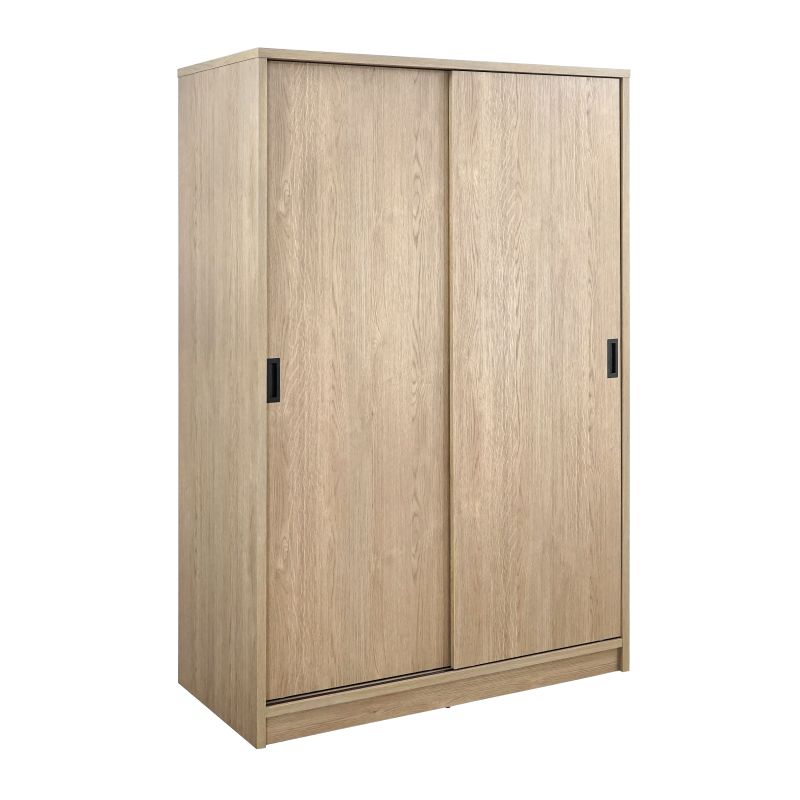
Other pieces have come and gone, as consumers tastes and needs have changed along with room configurations and home sizes. It’s one of the reasons we are seeing pieces such as the wardrobe being reintroduced by Coaster, which debuted several new units at the recently concluded Las Vegas Market.
The timing is right for this type of addition to the bedroom, particularly as smaller homes feature smaller bedrooms and even smaller closet spaces.
Granted, the shift is not major as the average home size was 2,447 square feet in the first quarter of 2026 compared with 2,481 in the first quarter of 2023, according to the U.S. Census Bureau. But ultimately, even a small difference like this can impact room size and even the size of closets in certain rooms.
Hence the popularity of the wardrobe, which is primarily used for hanging clothes, although these also have some shelf and drawer storage space.
These units are extremely popular in Europe where many homes and apartments are even smaller than those in the U.S. As expected, a wide selection is available on the Ikea website, from sliding door and corner wardrobes, to open wardrobes offering a mix of hanging, shelf and drawer storage.
I had first come across these types of units during my many visits to shows on the Asia circuit including Malaysia and China. Sometimes extending for much of the length of a wall, they often replaced dressers and chests, creating additional closet space from the floor almost to the ceiling with as many as four to six or eight doors. In most cases, these particular versions are designed for bedrooms with little or no closet space.
It was not something you typically saw in the U.S. market, as most bedrooms have closets including large walk-in varieties, some of which are large enough that they could be considered a room within a room. But in smaller homes and apartments with smaller closets, the wardrobe can be a very fitting addition, not just in second or guest bedrooms, but also in primary bedrooms.
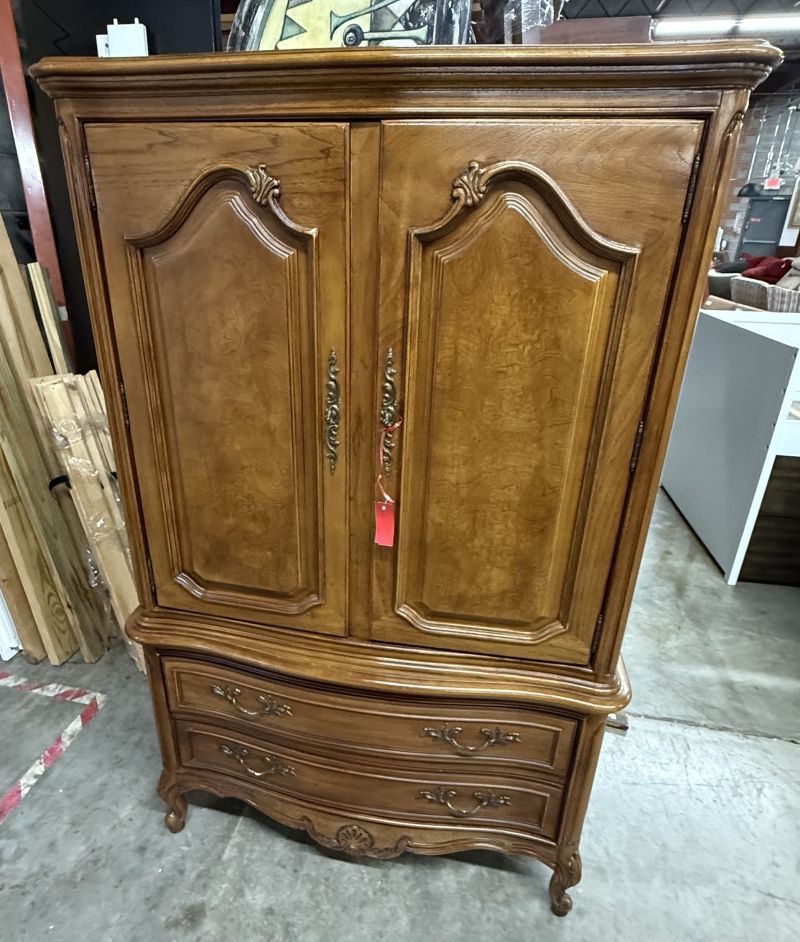
This brings us to a close cousin of the wardrobe — the armoire. As the subject of clothing storage units came up in conversation with a close industry friend and colleague, I had to admit, I didn’t quite know the difference between the two as a journalist with more than two decades of experience covering the case goods segment should.
While I should not rely on AI to help me understand the difference, here was an interpretation by Copilot that seemed to nail it in its descriptions.
“A wardrobe typically has a minimalist design with clean lines, one or two doors, and a simple interior featuring a hanging rod and sometimes a small shelf or drawer. It is often made from modern materials like laminate or MDF and is designed to blend seamlessly into a room.”
Copilot went on to note:
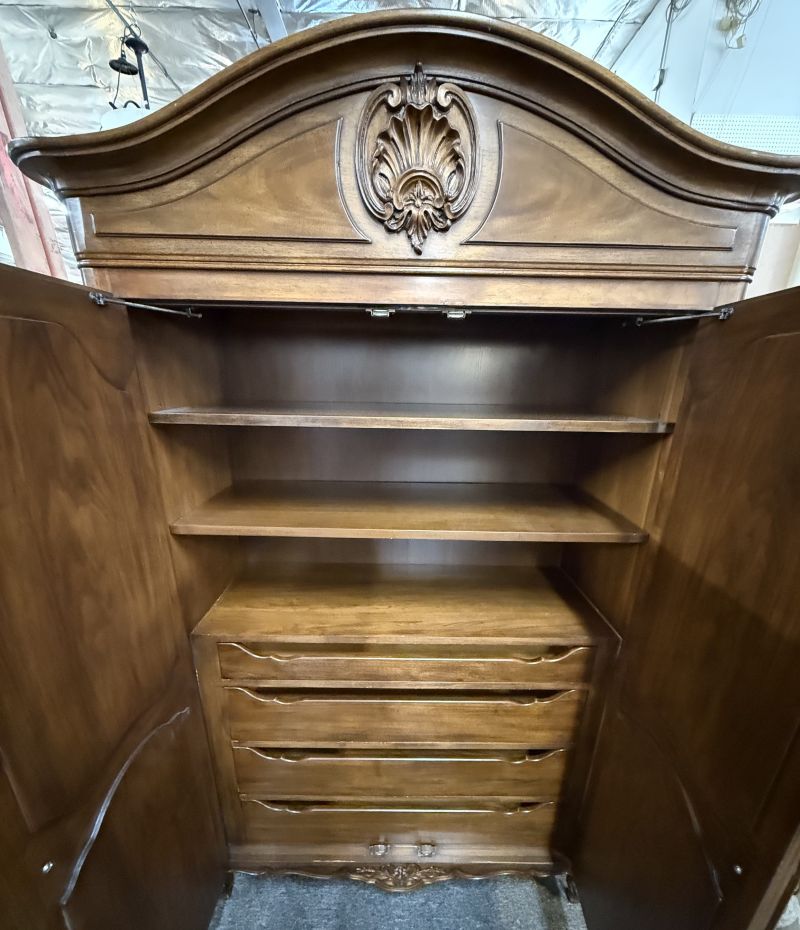
“An armoire, on the other hand, is usually larger and more decorative, often crafted from solid wood or high-quality veneers. It may feature intricate carvings, moldings, or vintage-style hardware, making it a focal point in a room.” Examples are shown above and at right.
My colleague reminded me not to forget the all-important chifforobe. And here is what Copilot said about that:
“A chifforobe is a versatile piece of furniture that merges the features of a wardrobe and a chest of drawers. It typically has hanging space on one side and drawers or shelves on the other, making it ideal for storing both folded and hanging clothing.”
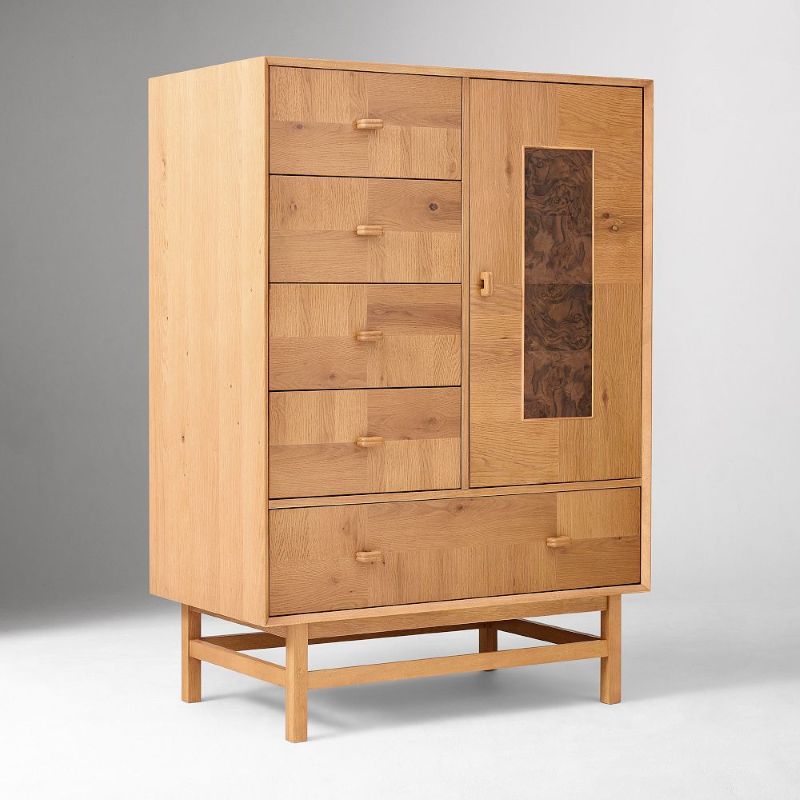
For those with as good a memory as my colleague, the chifforobe also has a key role in “To Kill a Mockingbird,” as detailed here. These and other similar pieces continue to occupy a place at retail with many different models offered by retailers ranging from Furniture.com and West Elm to DutchCrafters and Raymour & Flanigan, to name several.
My personal preference has always been the armoire as they often have a more stylish appearance. They also are highly functional in nature with plenty of drawer and storage space revealed behind two doors.
Regardless, these items are built to serve different purposes for the consumer. As consumers want these to reflect their personal style and the style of their home, they represent an area of opportunity to make what’s old new again and in some cases introduce something totally new and functional for today’s consumer while hearkening to their storied past.