 by
Manufacturer taps into its capacity and capabilities to produce one-of-kind luxury furnishings in Vietnam
HIGH POINT — When Jonathan Sowter regained a controlling stake in furniture manufacturer Jonathan Charles in early October, it was part of an evolution that has guided the company back to its roots as a producer of luxury products bearing signature finishes, forms and materials sought after by customers around the world.

A visit to the company’s High Point showroom highlights these capabilities in a line that includes bedroom, dining, occasional and accent furniture that also has recently expanded to art and lighting. It produces this mix in its nearly 1 million square feet of production facilities in Ho Chi Minh City, Vietnam.
By regaining his majority ownership position from Markor, Sowter sees an opportunity to return the company to its position as a resource for one-of-a-kind furnishings built by artisans who are experts at their craft. In doing so, he believes this can reinvigorate a brand that was compromised as previous presidents tried to make it into something it wasn’t.
“Companies go through these things when they have a new president, and they feel their job is to completely change everything,” Sowter told Home News Now heading into the October High Point Market. “They tried several different presidents over the years and they didn’t quite understand what they got. And what we’ve got is the factory’s DNA and the factory’s capabilities and the factory’s craftsmanship. Jonathan Charles over the years has developed a niche for itself or a specialty, and it was difficult for anyone to come in and be president of that company. They didn’t understand what made it different.”
Sowter, who started the company in 2004, understood this difference as he built the company from the ground up, after having worked under Paul Maitland-Smith at Theodore Alexander earlier in his career.
In early 2018, he sold a majority stake in the business to Markor Furniture International, but said he never stepped aside from the operations and production side of the business. Working each day in the factory, he watched things develop under prior presidents, who thought they knew better how to grow the line, in essence trying to make it look like Bernhardt, Universal or even Lexington.
Over the next several years, Sowter watched and waited as this evolution continued. Then, realizing what they had in Sowter’s leadership, talent and expertise, Markor asked him to return as president of the brand, a change the company announced in January 2024. Later that spring, the company also hired Garth Robinson, a veteran of the high end — including his most recent role as vice president of sales and marketing at Theodore Alexander — as senior vice president of sales. Robinson was named president earlier this year.
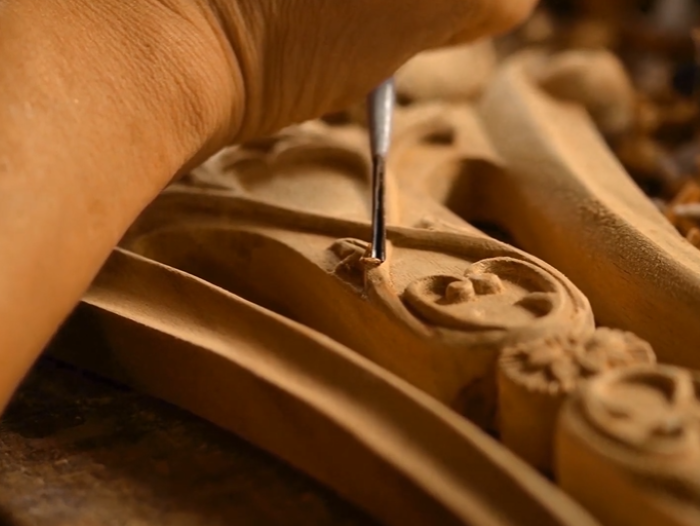
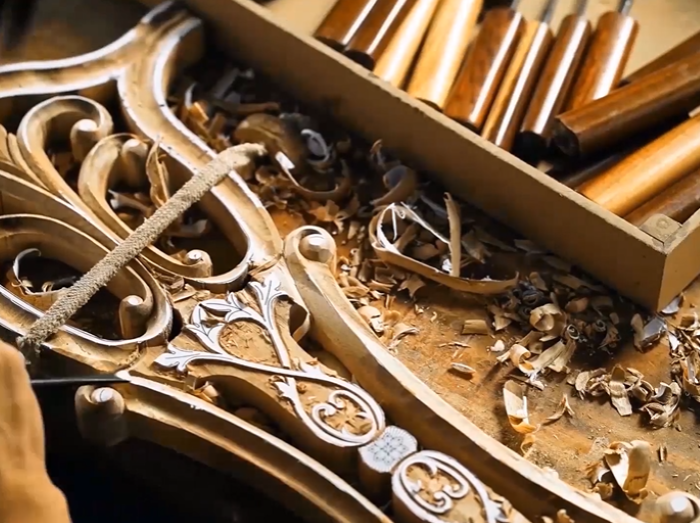
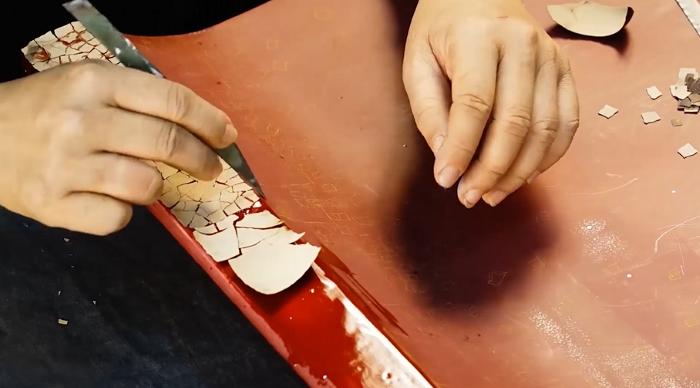
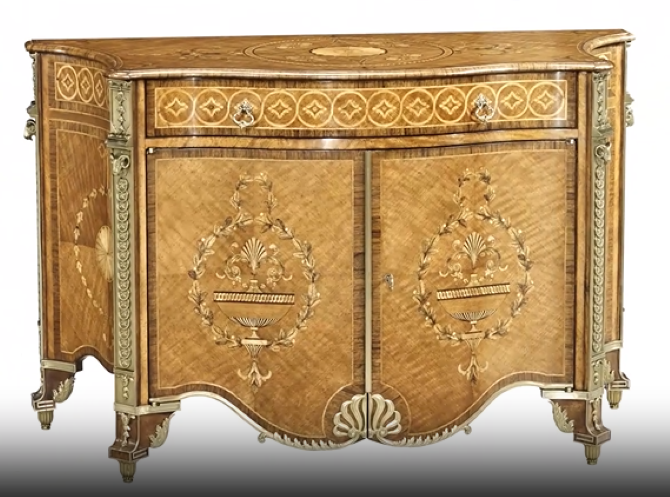
Understanding some of what Sowter means when discussing the DNA of the brand can be hard to envision without seeing the Vietnam production facilities where company artisans build each piece by hand. There, they can be seen laying up fancy-face veneers and marquetry, carving intricate scroll, leaf and animal patterns, producing hand-forged metal components from hand-carved forms and even hand painting gilded chinoiserie landscapes.
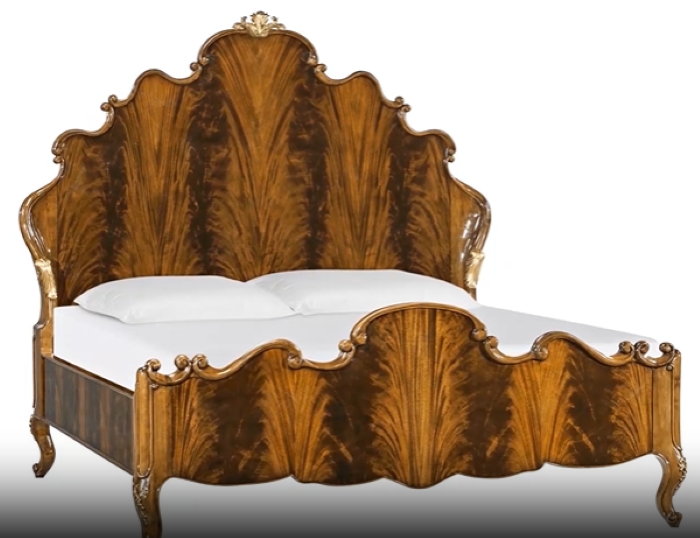
These and many other designs can be seen not only in the company’s High Point showroom, but also in a recently published book called “JC Iconic – The Journey of Jonathan Charles.” (The company had a few thousand of these printed for visitors to its showroom and graciously gave me a copy before market. For those wanting to learn about Jonathan Charles, it’s well worth it to study what’s on every page, including each product image and description.)
Sowter said that he enjoyed his job running the factory from the time he originally sold his ownership stake to Markor, and continues to be involved with the facility on an ongoing basis, even having regular meals with employees in the company cafeteria.
“It was good for me to have a little break to focus on the factory. The factory is a massive business,” he said. “So for that entire time, I was in the factory. And I was still making Jonathan Charles, but was following the direction of the president and what Markor wanted for that vision.”
And while he’s not critical of that vision, he is pleased to be once again in a primary ownership and decision-making role with Garth Robinson at the helm to help lead the company on its path forward.
He said that expanding into lighting and art, in addition to wood furniture and upholstery, further employs the skills of the factory and its workers.
“All the lighting in the showroom is Jonathan Charles,” he said, noting that the foundry is a key part of the development and production process. “And the frames are these beautiful magnificent wood frames. … It takes a furniture factory to make that frame. It is not a frame factory that makes that.”

“And that is where I am having more fun with it,” he added. “The goal was two years ago, when Garth joined us, to make sure that everything in the showroom is Jonathan Charles. The art on the wall was a prop and the lighting was a prop. No lamps were for sale. This was our first market where every lamp and every piece of art on the walls is Jonathan Charles. It is a big milestone for us.”
He noted that this expansion of the line shows how the company is leaning into its abilities as a manufacturer that produces designs that can be mixed and matched or part of a collection.
“Jonathan Charles moving forward is going to be doubling down on its DNA and will continue to focus on bringing amazing value for the money for beautiful pieces of furniture that when you look at them, you think, ‘Wow, that should be a lot more expensive than that.’ We are not selling cheap furniture — we are not in that market. But we want to have this value proposition.”
Robinson agreed that the company’s position as a vertically integrated manufacturer provides a strong value proposition to designers and retailers alike.
“(As a manufacturer) we don’t have to pass that layer of cost along,” Robinson noted of companies that are sourcing from other producers. “That is why we are such a great value.”
He added that the response to its product mix has been very positive of late.
“We are exceeding their expectations and just want to keep exceeding everybody’s expectations,” he said.
For Sowter, the message to its customers is clear.

“The majority of our customers are interior designers, and our role is to make them look good,” he said, noting that it aims to have its production model work to their advantage. “When you are sourcing, there is a limit to how much detail you can have and how much control or influence you can have over the end product. There is no limit for us.”
“I would say that for me being away from Jonathan Charles in the U.S. for six years and getting back involved has given us this new energy and this new passion for it,” he added. “I missed it, but I didn’t realize I was missing it until I started to get back involved. … The bottom line is that I am in total control, and the future is clear about where we want to be. And we are going to have great fun bringing product back to market that is part of our original roots. Markor has been gracious enough for this transition to happen, and we are still good friends with them. It is an amicable relationship where they are going to allow me to sail the ship.”