 by
by What has become a familiar narrative is presented in case against those who took FRG private in 2023
WILMINGTON, Del. — The buffet of litigation that has been the bankruptcy of Franchise Group just saw another hot dish added to the line.
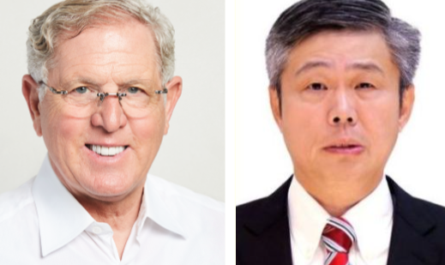
The Litigation Trust established as part of the FRG bankruptcy filed suit in Delaware’s Court of Chancery against the holding company’s former CEO, Brian Kahn, and B. Riley Financial Chairman Bryant Riley, among others, for orchestrating a “brazen and calculated scheme to defraud” FRG. This scheme centered on a deal to take FRG private, a transaction Kahn used to hide more than $400 million in personal debt tied to a separate hedge fund fraud, the complaint alleges.
“Before the transaction, Kahn was drowning in more than $400 million of concealed personal debt, including over $200 million in loans secured by pledged FRG shares,” the complaint states. “Kahn took on these debts and pledged these shares to hide the cash collateral deficit he had accrued as the primary trader at a now-defunct hedge fund known as Prophecy Asset Management.”
The trust seeks more than $700 million in damages from Kahn, Riley, Riley’s firm BRF (renamed BRC Group in January), former FRG director Matthew Avril, law firm Willkie Farr & Gallagher, the Jefferies investment bank and related entities.
A litigation trust is a legal vehicle routinely created as part of Chapter 11 bankruptcy proceedings to pursue lawsuits on behalf of creditors after the business emerges from or is wound down through bankruptcy. Rather than leaving a reorganized company to sue its own former executives, the bankruptcy reorganization plan transfers those legal claims to an independent trust, overseen by a court-appointed trustee, whose sole job is to chase down recoveries and distribute any proceeds to creditors.
In the case of FRG, the trust was formed in June 2025, with Lawrence Hirsh serving as trustee.
The allegations
Kahn ran up significant trading losses as the primary trader at Prophecy Asset Management, a now-defunct hedge fund at the center of a $300 fraud scheme of its own, according to the complaint. Kahn pleaded guilty to conspiring to commit this fraud in federal court in New Jersey in December last year. He then covered those losses by borrowing hundreds of millions of dollars by pledging FRG shares as collateral, the litigation trust’s filing asserts. Kahn did not disclose these transactions to the company’s board.
The trust alleges that as scrutiny of Kahn’s finances threatened to become public, he and Avril engineered a plan to take Franchise Group private in a deal that closed in August 2023, a deal that paid shareholders $30 a share. Taking the company private, the suit contends, ended the SEC reporting obligations and shareholder oversight that risked exposing the hidden debts and Kahn’s role in the Prophecy fraud, a narrative that is offered by investor lawsuits against Kahn and Riley, as well.
Central to this most recent complaint is a claim that BRF, which held the loan agreements secured by Kahn’s pledged shares, helped manufacture a false sense of urgency around the deal to push it through by abruptly threatening to stop purchasing consumer loan receivables from Badcock Home Furnishings, a FRG subsidiary at the time. This threat created what the Trust calls a “pretextual liquidity crisis.”

The suit also accuses two of the take-private deal’s supposed independent gatekeepers of failing FRG shareholders. Tapped to chair the special committee reviewing the offer, Avril is accused of instead acting as “Kahn’s agent” within that committee, steering the adviser selection process, sharing confidential committee materials with Kahn before other committee members saw them and declining to push back on price after B. Riley rejected a single counteroffer.
Willkie Farr & Gallagher, FRG’s longtime outside counsel, is accused of simultaneously representing Kahn personally in both the buyout and the federal investigation into the Prophecy fraud without telling the board or the special committee, while later drafting an agreement that funneled $15 million of company funds toward Kahn’s criminal defense.
Arguing breach of fiduciary duty, the complaint asserts that as FRG’s primary outside counsel, “Willkie owed FRG fiduciary duties, including duties of loyalty, candor, and confidentiality, and was obligated to act in FRG’s best interests.” Willkie did not fulfill these duties, the complaint states.
The judge presiding over FRG’s bankruptcy disqualified Willkie from representing FRG in the case in February 2025, citing conflict-of-interest issues, according to court records.
Finally, Jefferies, which was hired as the special committee’s financial adviser, is accused of coordinating with Kahn and BRF on the financial assumptions behind its analysis and for issuing a fairness opinion supporting the $30 price despite a compensation structure that paid it more if the deal closed.
Show me the money
About 15 months after the take-private buyout closed, in November 2024, FRG filed Chapter 11, which is the point in time the trust used to calculate damages. Its estimate is based largely on the gap between the company’s enterprise value at the time of the take-private deal, which was about $2.7 billion, and its value at the time of the bankruptcy filing, adjusted for asset sales.
In its 106 pages, the complaint brings 19 separate claims spread across the various defendants, including breach of fiduciary duty, fraud, corporate waste, illegal dividends, unjust enrichment, professional negligence and civil conspiracy. Beyond the roughly $700 million in damages, the trust is also seeking recovery of professional fees paid to Jefferies and Willkie, compensation paid to special committee members, the $15 million payment to Kahn, and about $42.3 million the complaint says Kahn caused to be transferred between corporate entities before the bankruptcy.
The defendants had not yet filed a public response as of this writing, but BRC Group has asserted as recently as its last 10-Q that two internal investigations cleared its executives of any knowledge of Kahn’s misconduct. Also in the 10-Q is the vow to fight every claim.
Trying to remove the stain
BRC Group Holdings recently reported a rebound of sorts in its second quarter 10-Q, a filing that shows the company managed to claw back only $1.9 million of the Kahn loan by selling what little collateral remained, or the equivalent of a rounding error against the roughly $225 million it was owed.
The fallout from FRG for BRC Group has metastasized into what looks like a rather robust court docket for the company. The 10-Q lists eight active legal actions, including stockholder derivative suits, that allege that the BRC Group board breached its fiduciary duties by continuing to entangle the company with Kahn.
Also active and mentioned in the 10-Q are a securities class action; a separate class action by FRG’s original shareholders that names Freedom VCM and Kahn, as well; and an arbitration demand from investors in FRG buyout. The 10-Q also discloses a securities class action filed by Ted Donaldson on behalf of investors alleging concealment of Kahn’s “illicit business activities.”
In addition, both BRC Group and Riley remain under active SEC subpoena, with the agency summoning current and former employees for testimony as recently as June this year, according to the 10-Q. Finally, the filing concedes in its risk disclosures that “unasserted claims” tied to Kahn could still surface, which, with the Litigation Trust complaint, surfaced they have.
Even if the complaint is successful, the $700 million in damages could prove elusive. Court records show that Kahn told a Delaware judge that even though he just bought a $6 million mansion in Florida, he cannot pay back Prophecy investors and, therefore, live up to arbitration judgments and obligations.
A trust suing Kahn on behalf of investors won an arbitration case against Kahn and a judgment totaling $309 million, according to court records. These investors now are asking the Delaware Chancery Court, the same court administering the trust’s complaint, to compel Kahn to detail his finances. Kahn states in a letter to the court that he already has detailed his finances, showing that there is “nothing left” from which to pay back, according to reporting by Bloomberg.
Ties to Prophecy
In November 2023, Prophecy co-founder John Hughes admitted to defrauding investors, one of three co-conspirators identified by the SEC. While Kahn initially denied any involvement, it later emerged that he was a primary sub-adviser managing 86% of Prophecy’s funds. The third co-conspirator, Jeffrey Spotts, saw his case, brought by the DOJ, dropped in early June this year.
Just after Kahn pleaded guilty in his DOJ case, BRC Group filed a $735 million lawsuit of its own against Kahn, Kahn’s wife and the law firm Willkie Farr & Gallagher. BRC Group’s lawsuit makes many of the same claims against Kahn that the trust’s complaint alleges, according to the filing.