
 by
by The success of this initiative in bedroom led the company to develop 2 follow-up initiatives, Custom Cabinets by Design in fall 2025 and Bars & Credenzas by Design this past April
HICKORY, N.C. — As a domestic producer of wood furniture, Sherrill Furniture has long prided itself on getting customers what they want and within relatively quick lead times, particularly when compared with products from Asia.
The company took that to the next level in the summer of 2025 with the launch of its Bedroom by Design program. This allowed its highly skilled workforce to not only produce a largely handmade product, but also a new category that customers could design on their own, selecting the piece, door and drawer fronts, plus the hardware styles and legs, creating a unique look that suits their personal taste and home environment.
Cabinets by Design, launched in October 2025, includes categories such as wine and coffee bar furniture, lounge and home office furniture, plus kitchen furniture, craft room, office and conference room furniture. Bars & Credenzas by Design, launched this past April, offers pieces for the game room, living and family rooms, the dining room, conference room, home theater and media room and entryway/bonus room. Both have a similar menu of options including finish and size for the bars and credenzas and hardware, drawer styles, door styles and base options for the cabinets.
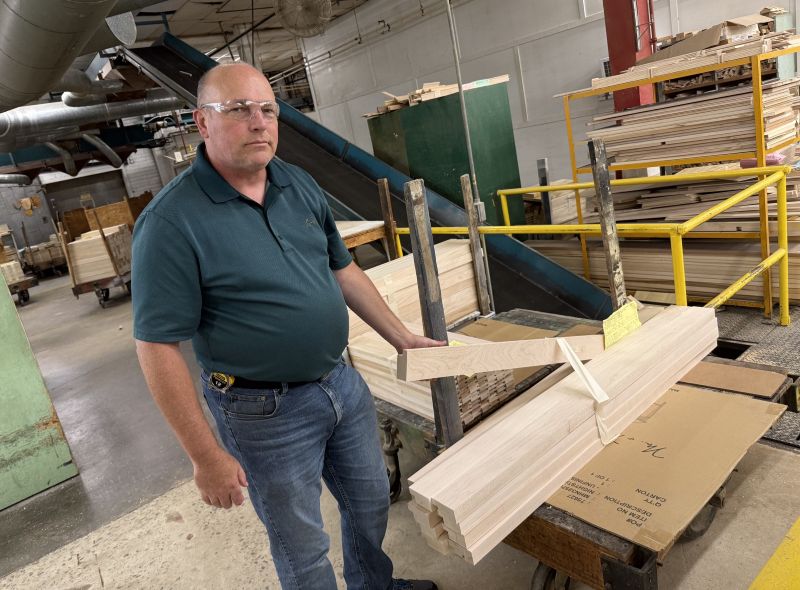
Around mid August, Home News Now toured the company’s 500,000-square-foot Hickory White plant where all this magic takes place, receiving a first-hand look at the steps and processes involved while getting to meet some of the workers that make it happen. The plant, which produces all of the company’s domestic case goods including Sherrill case goods, employs about 150 workers.
In addition to creating a product that is tailored to the wants and needs of the customer, the program utilizes the capacity of the company’s existing domestic manufacturing facilities. It also highlights the skills of the workers at the facility, placing some 150 individual pairs of hands on the product.
In some facilities, producing custom product to this scale would slow down production and finishing lines geared toward large runs by throwing too many variables into the mix. Sherrill avoids this challenge with the use of advanced technology and CNC machinery that complements the handcrafted nature of the line, which also uses various wood veneers, plus solid wood species such as oak, maple, walnut and ash along with dozens of finish combinations.
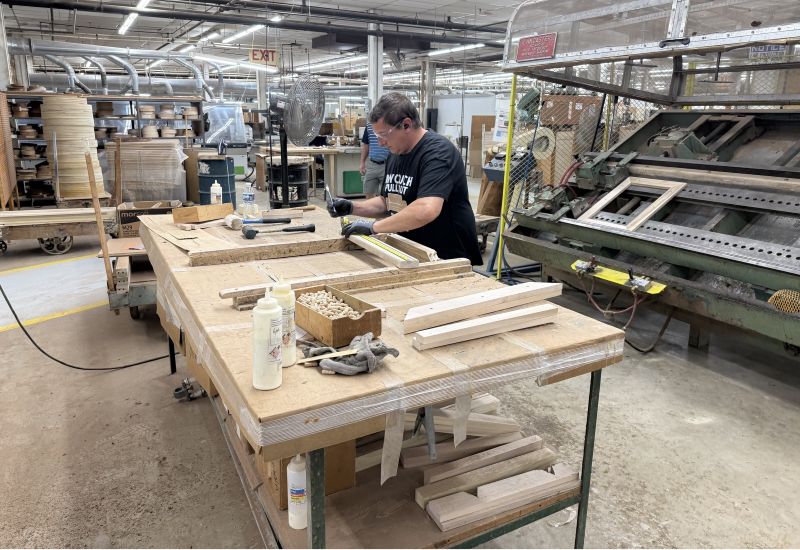
During the tour, the company showed Home News Now the process from start to finish, highlighting how it cuts boards to size with equipment such as manually operated cut-off saws, plus six CNC machines that create even more accuracy in various wood processing and parts production and shaping done at the facility.
But many hands continue to touch the product, ranging from hand sanding and finishing to assembly on items including desks, bookcase and display units, hutches, beds, nightstands and benches to name several. Finishing involves multiple steps, with a lot of handwork done as part of the process, including hand painting and the application of gold and platinum leaf, for example.
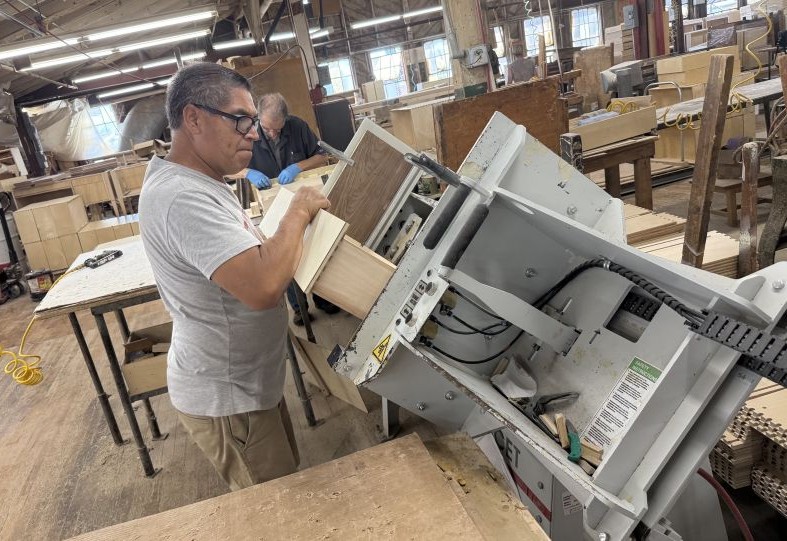
Inspection is also important at various stages to ensure each piece meets quality standards. It also fixes problems sooner versus later so the product gets shipped as it was intended.
“The sooner you can get the quality right, the easier it is to get it out the door,” said Matt Melcher, director of quality for case goods. “The more material you put on it and the more effort you put into it, the harder it is to fix. The good thing is we can fix anything that may have happened during the manufacturing process.”
He said this attention to detail and quality has kept its return rate below 2% out of the Hickory case goods plant.
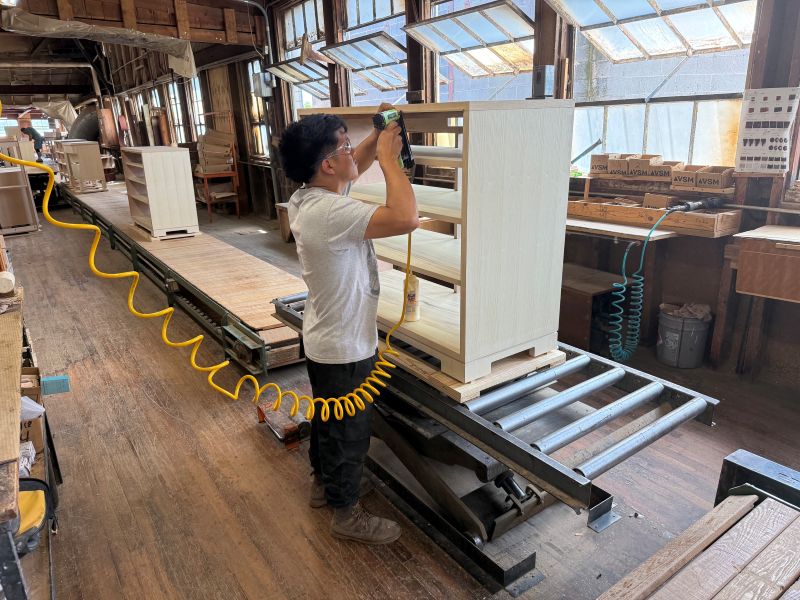
“We have to credit very little, and that’s a testament to our quality and to the quality of the craftspeople that are working here,” he said, noting that the industry standard for returns is closer to 3% to 4%.
“With our price point, we want to have the quality right the first time,” added Dax Allen, senior vice president of business development, noting that there is more room for error or damages should pieces have to be sent back to the plant to correct issues.
The company also has improved packaging to ensure the product gets shipped with no damages. Those same upgrades in packaging have also helped make sure the product passes drop tests.
The visit also showed how far the company has come with the program, having started with a single bed in different sizes along with a dresser and a couple of different nightstands. Now along with the new pieces in the bedroom category (a half-dozen beds in different sizes, three to four nightstands, a few dressers, a chest, two dressing table/desks and two bookcases), the program has offered multiple SKUs in the other two custom programs.
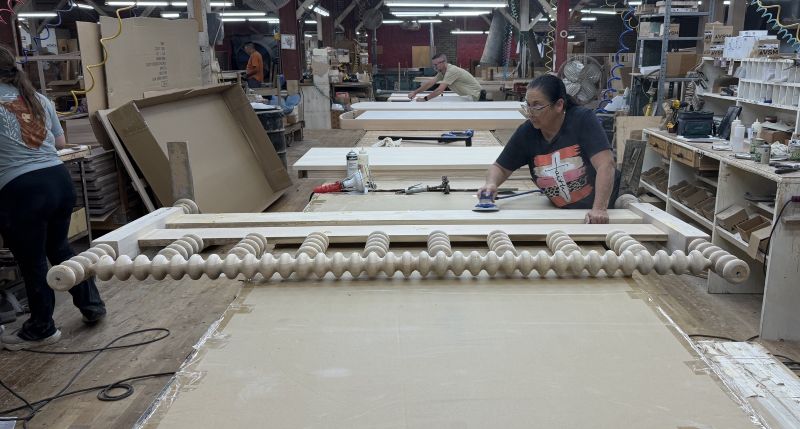
“After Bedroom by Design, our strategy was to serve the entire home with the program,” Allen said, noting that the other programs came online about the time that Howard Miller and Hekman announced they were going out of business, creating a void in the market for custom modular storage pieces.
“There is a big gap in the middle, where someone with a good, efficiently run operation in the U.S. can produce custom furniture with a much broader appeal for the price point, and working with retailers to understand what the need was for that type of furniture, ” Allen added, noting that bedrooms in the program retail from about $5,500 to $7,000 placing it in the better part of the company’s good-better-best product line, with sister company Hickory White priced at the best level. “We really worked backwards from what is the value we have to deliver and what are the products that people need and what types of customization are people really going to value.”
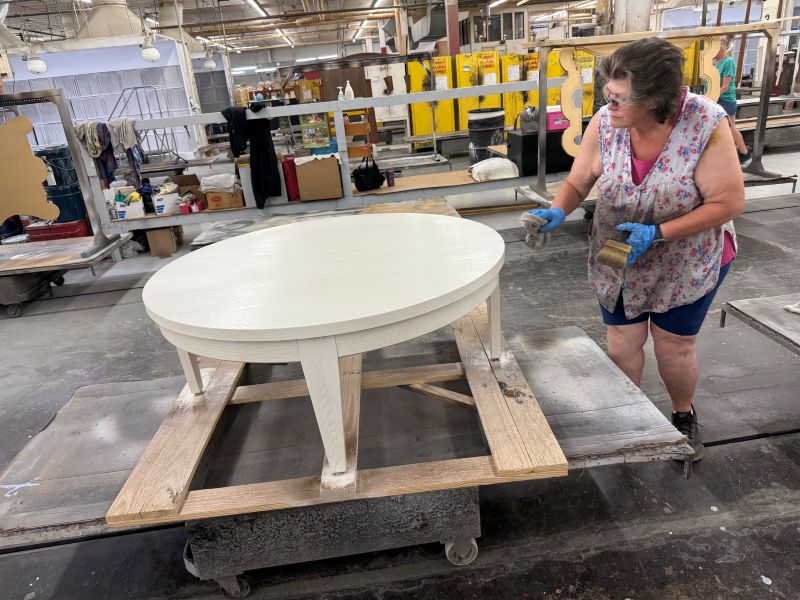
He added that the program also is driven by efficiency, using as many common parts as possible in different pieces in the line.
“You will see in this program there are more common parts and pieces that go into making furniture than anything else in the company,” he said. “We are focusing on efficiency of manufacturing to meet and deliver that value. That was the strategy, and the rest of it was how do we create growth that keeps domestic case goods manufacturing viable. … It was really looking at ‘how do we keep our growth where it needs to be’ so that the headcount and the machines are fully utilized in the factory. We are getting well on our way to where we want to be.”
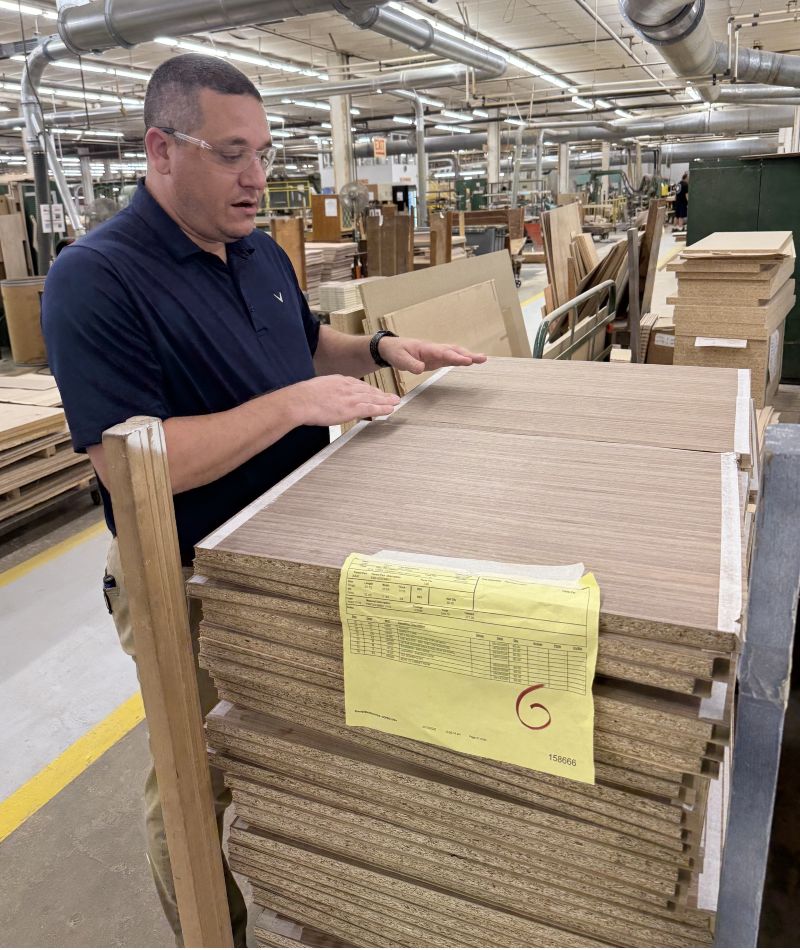
The company also scaled its operation to meet the demand of the program, Melcher noted.
“We increased our capacity by adding personnel, and there is also some machinery we added to meet the demand within this area,” he said during the mid-August visit, noting that product made for the By Design program is also made next to product being produced for Hickory White or Sherrill Occasional, further improving plant utilization. “It really has fallen in nicely to the mix to keep everybody working full time. We even have some departments on overtime right now just to keep up with the backlog.”
“The good thing is we have the capacity for it,” he added.
At this stage, the company has high hopes for the program based on reaction from dealers and designers alike, with the intent of expanding beyond the largely traditional design palette.
“We are playing catch-up constantly with this program based on how quickly it has taken off,” Allen said, noting that demand continues to grow 18 months into the program. “The rate of sale continues to accelerate even with broader distribution. So it’s a really good story for American manufacturing.”



Thank you for making the case goods in the USA! You are helping individuals and their families!!!!!