
 by
by The company believes that “Canada and the United States have always accomplished more by working together than by creating barriers between us.”
HANOVER, Ontario — With a rich supply of raw materials and talent, Canada has long been one of the world’s most important wood furniture resources.
From solid wood bedroom, dining and occasional furniture, producers are also known for their finishing capabilities, a multistep process that matches and perhaps even exceeds that of some U.S. counterparts.
So when the U.S. announced its plans to impose duties upwards of 50% on a host of Canadian products including wood furniture, it threatened to disrupt an industry that has served the U.S. market for decades. Few if any retailers would stomach the imposition of such cost increases, meaning they would stop ordering Canadian-made furniture immediately.
In turn, such disruption potentially deprives U.S. consumers of product they are likely not to find anywhere else, including from a limited number of U.S. wood producers in the U.S. and even Mexico.
In our follow-up to this announcement, we reached out to several wood furniture producers, some of which declined to go on the record given what’s at stake: access to the biggest consumer market in the world for furniture. Companies including Bermex, Canadel and even upholstery producer Décor Rest responded, although upholstery is not covered by the latest round of tariffs, and instead falls under global Section 232 tariffs upwards of 25%.
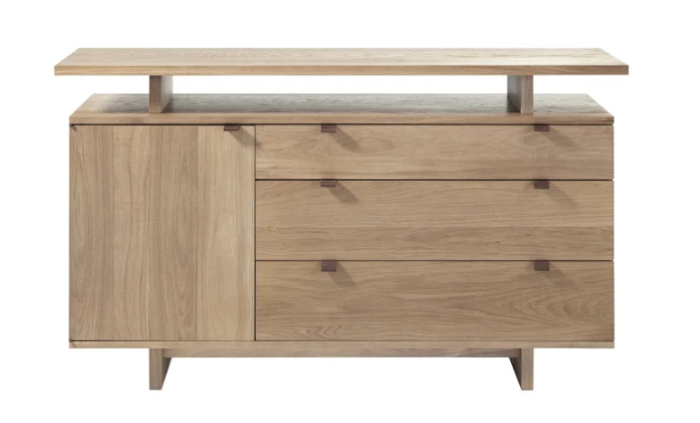
Following the publication of these stories, we later heard from West Bros., another major resource for solid wood furniture. Founded by Paul West in 2000, the Hanover-based manufacturer has since produced a line of residential and commercial furniture that includes bedroom, dining, occasional and office products made from solid maple, solid white oak, solid cherry and solid walnut, to name several key species.
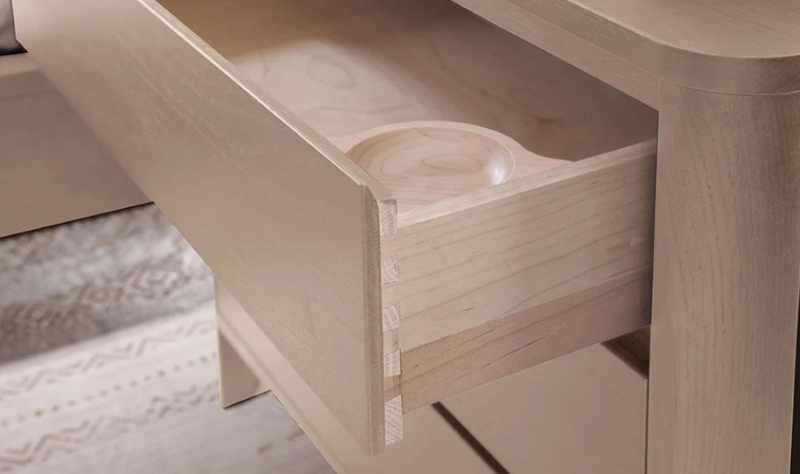
In addition to highlighting its extensive line, its website also helps define what differentiates the company from its peers in wood furniture by educating consumers about its materials story and construction methods. It goes on to describe other key details ranging from its custom finishing process to use of a soft-close drawer system in cases and a floating panel system for its door construction that helps prevent warping and twisting of pieces, as each door is made from five pieces to complete the frame and center panel.
These are just a few of the things that make the company unique. It also has stayed current with designs, offering a largely transitional and soft contemporary aesthetic that appeals to multiple age groups.
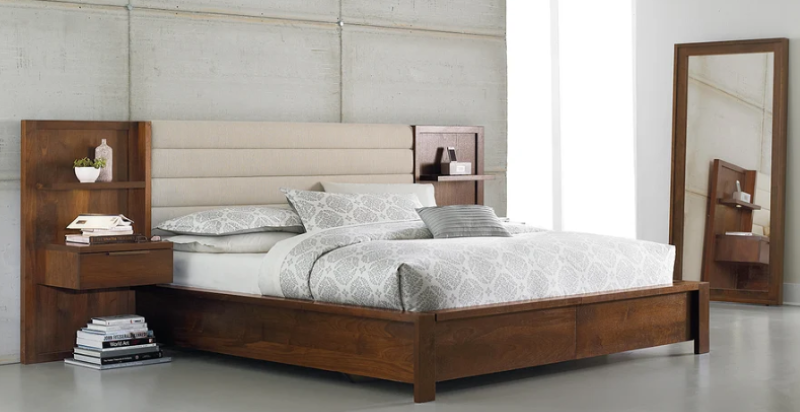
That said, the line is not inexpensive. A shelter platform bed made with solid white oak in its Curva collection retails around $3,900, which is where many imported middle- to upper-middle-priced veneered bedrooms top out.
Still, the U.S. market remains around 65% of its overall volume, Samantha Mund, company head of customer service and marketing, told Home News Now. Despite the threat of tariffs, business has been about normal of late, she added, with most of the activity coming from U.S. retailers in recent weeks.
“I think that other than a few little panic buttons being pushed, most people are expecting something to be worked out before the deadline,” she said of the Aug 19 effective date.
She also believes the tariffs will be counterproductive for both countries in the long run.
“As a Canadian manufacturer with decades of experience supplying the North American market, I respectfully disagree that these tariffs will achieve their intended objective,” she noted. “The Canadian and U.S. furniture industries are deeply integrated, with supply chains, manufacturers, retailers and consumers benefiting from a long-standing partnership built under free trade.”
Of course the benefit of tariffs remains to be seen, which is to reverse what the U.S. says are Canada’s unfair trade policies regarding the importation of major American products such as automobiles, alcohol and dairy.
But for furniture, Mund noted, such high tariffs will more likely create uncertainty, strain an already strong trading relationship, and increase costs for American businesses and consumers rather than strengthen U.S. manufacturing in these and other areas.
“Tariffs ultimately function as a tax within the supply chain, and those costs are often absorbed by U.S. importers, retailers or passed on to American families,” she said. “Canada and the United States have always accomplished more by working together than by creating barriers between us. I remain hopeful that the negotiation period will lead to a practical solution that recognizes the value of our shared manufacturing economy and preserves the competitiveness of businesses on both sides of the border.”
That said, we too can only hope that the two governments come up with a solution that benefits both the U.S. and Canada. Providing more options versus less in the marketplace only benefits consumers, regardless of how much they are willing to spend.
Putting a 50% tariff on Canadian furniture will only kill that momentum in the marketplace and penalize an industry that has nothing to do with the unfair trade it seeks to address.