
 by
by 5th-generation owner Jennifer Hermann reflects on her family’s legacy
BRENHAM, Texas It isn’t often that a furniture store reaches the milestone of 150 years in business, but Hermann’s Furniture in Brenham, Texas, achieved that this year. The family-owned retailer is not only the oldest furniture store in Texas; it also has the unique distinction of still being in its original location. It’s welcome news, especially when the industry hears of closings of family-owned businesses like Priba Furniture in Greensboro, North Carolina, and Weir’s Furniture, based in Dallas.
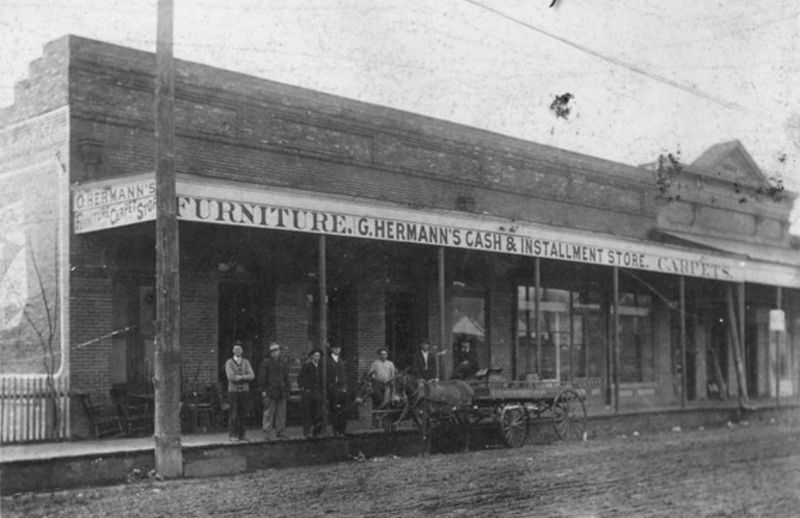
Five generations ago, Gottlieb Hermann, an immigrant from Germany, moved to Texas and, in 1876, opened G. Hermann’s Furniture. Today, Gottlieb Hermann’s great-great-granddaughter, Jennifer Hermann, has taken the reins of the store as owner. Her father, the late John Hermann, and a fourth-generation family member previously ran the store. Inside the 30,000-square-foot location, shoppers will find nearly every category of furnishings and accessories needed for a home, including seating, bedding, tableware, decor, drapery, shutters and many customizable products.
As for the retailer’s ongoing success, she credits a sense of flexibility.
“I would say our ability and our desire to adapt to change, to not stay stagnant. That’s something that has been true in our family. No one has said ‘Oh, that’s the way we’ve always done it,’” Hermann said.
To put it more bluntly, she added: “If you don’t adjust to change, you will die off.”
“I think another key thing is really being willing to try something new and do something different than what everyone else is doing,” she added.
One example of Hermann Furniture’s strategy changing dates back to the 1980s, when the oil and gas industry in Texas collapsed. Around that time, Hermann said her father, John, noticed antiques becoming more popular. To capitalize on the trend, he used one of the business’s unused buildings and transformed it into an antique mall. Then, he started adding home gifts and accessories in the path of customers, creating displays to catch their eyes as they wandered through the antique mall.
“It all developed from there,” Hermann recalled. “But it was that foresight to see something changing and grab hold of it. It worked.”
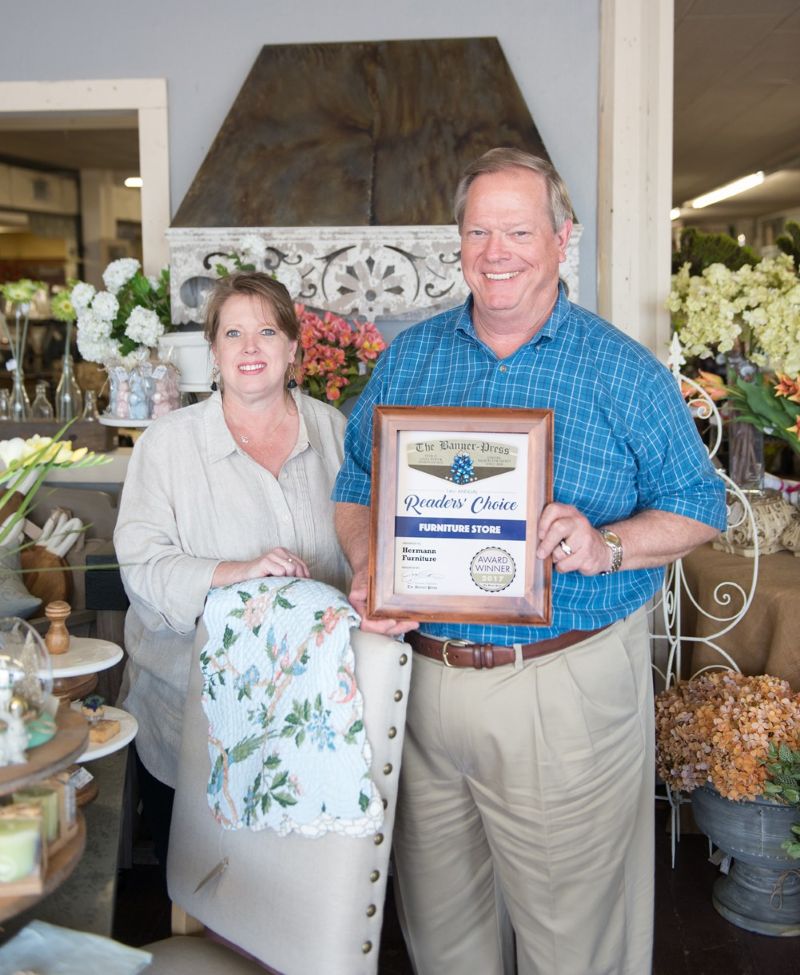
Today, Hermann’s Furniture still offers a huge selection of home gifts and accessories. Hermann said that, as a company, they have stayed “very Southern” and true to their roots while also making sure to stay up to date with today’s styles.
The retailer has also added custom ordering capabilities, which Hermann says is increasingly important to today’s consumers. In addition to their rich history, Hermann believes two things set them apart as a business: personal service and an ever-changing lineup of merchandise.
“If you don’t find something here that you like, you don’t just have to move on. We can find something for you or have something made for you.”
Hermann said in some cases, they have made furnishings for generations of the same family.
“Every time you come in, you’re going to find something different. Pretty much anything you want for your home you can find here.”
It’s also part of the reason Hermann’s Furniture doesn’t do much e-commerce. In addition to constantly refreshing its merchandise assortment, the retailer has found that their customers like to come into the store and touch things. Another thing the store doesn’t do is commission-based sales.
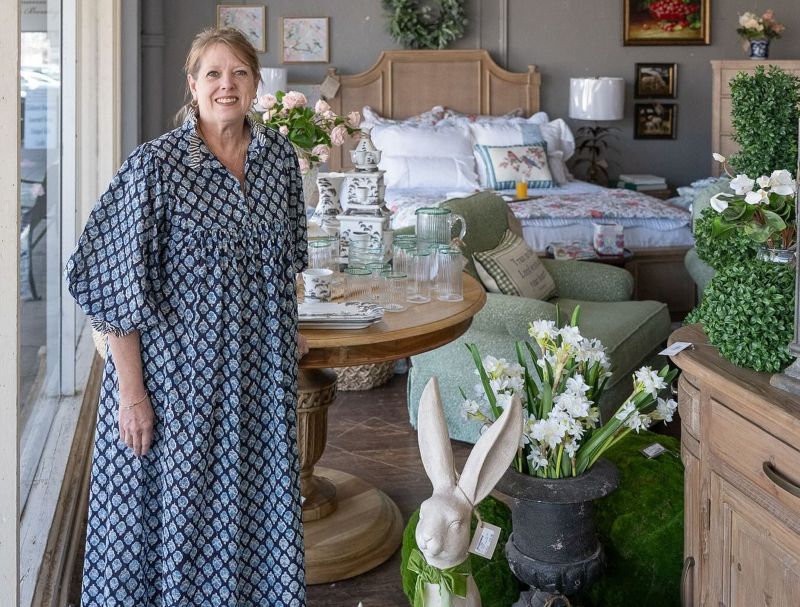
“Everyone helps everyone,” Hermann said. “It’s a very friendly shopping atmosphere; it’s not a high-pressure sale. We all work together to make sure the customer is happy. That’s been that way since the dawn of time.” She added that when customers come in, they’re never treated as a number.
A service-oriented approach and adaptability is, in part, what has carried Hermann’s Furniture for 150 years, but it’s also Hermann’s advice to other independent retailers.
“Try not to get stuck in a rut,” Hermann said. “Try something, and if it doesn’t work, then try something else. Don’t just go down the ordinary path of, ‘I’m a furniture store, and this is what we do and this is what we carry.’ Really listen to your market. If you see a niche that isn’t being filled, maybe you can fill that and work it into your store.”
As for what Hermann wants the retailer to look like another 25 years from now, she says it’ll depend on how society and consumer preferences evolve by then. But she said one thing is for certain: “We hope we’re not too far from where we have been, but we definitely don’t want to look the same.”