
 by
by Many see quality and value in pieces that have been well cared for and that have thus held up over time
Editor’s note: This is a continuation of an occasional series on the growing appeal of consignment furniture.
WINSTON-SALEM, N.C. — Anyone visiting consignment stores or antique marketplaces will come to the following realization: These shopping experiences are popular among a wide mix of consumers, including young consumers.
It’s a realization that came to mind during several visits made to these venues in recent months, starting late last fall through the winter, spring and early summer months. The places are full of young shoppers looking for anything from jewelry and old books, magazines and records to antique glassware, plates, candelabras, lamps, figurines, old paintings and more.
The more, I would add, includes furniture, which of course is one of the highest ticket items, whether we’re talking a dresser, buffet, secretary or a chest of drawers. Beds and dining tables also are part of the mix as they represent diverse styles covering many different development periods.
This and more can be found at these venues, which exist in many, if not all, communities around the U.S.
After speaking with some proprietors and even those renting small booths, it became clear that they are seeing more and more younger generations coming through the doors on the hunt for vintage items. Of course, not every one is shopping for furniture — that remains the domain of both brick-and-mortar retail and e-commerce specialists such as Wayfair and Amazon.
But the owner of Laster’s Fine Art & Antiques on Stratford Road in Winston-Salem remarked that he’s seeing more and more younger customers come in, including repeat customers. Whether they buy during each visit is irrelevant. “That’s our future,” said owner Larry Laster, as one regular young couple came in and left after not buying a single thing. He knew they would be back and at some point buy something, just as the author of this column did after more than several past visits.
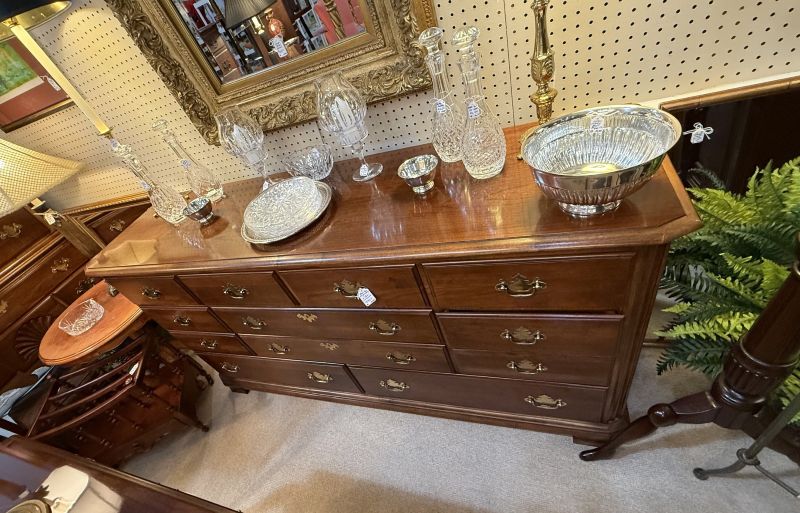
The subject also came up during a conversation I had with the renters of another small booth in a larger antique marketplace where I live in Kernersville, just outside High Point. With all the commodity — and in some cases poor quality/disposable — product that’s prevalent at many big-box stores, younger consumers are looking for something that carries a history and heritage that not only bears quality, but also has a storied name behind it.
Another selling point? Sustainability as the pieces are not requiring the use of raw materials such as trees, petroleum-based finishing materials or even huge amounts of fuel used to ship raw materials on containers from the U.S. to Asia only to be sent back on containers as finished product. The main fuel eaten up with consignment furniture is the cost of renting a truck to ship the product from the store to one’s home.
As an associate from Consignment Furniture Emporium in Winston-Salem told me just yesterday, young consumers also like the environmentally friendly nature of used and well cared-for furniture that has stood the test of time.
This is all comes down to dollars and cents as the turns at many of these consignment stores is significant. Every week, many of these places I visit in the High Point area are getting new product on their floors as customers young and old alike snap up products they perceive as high value, particularly considering the prices.
As referenced in a previous column, there are many brand names to behold and here’s just a small listing: Century, Henkel Harris, Theodore Alexander, Bernhardt, Stickley, Lexington, Hooker, American Drew, Hammary, Kincaid, Kindel, Kittinger, Bradington-Young, Pulaski, Flexsteel, Stanley, Thomasville, Hickory Chair, Maitland-Smith and many more, including AICO, Liberty Furniture and Ashley to name a few.
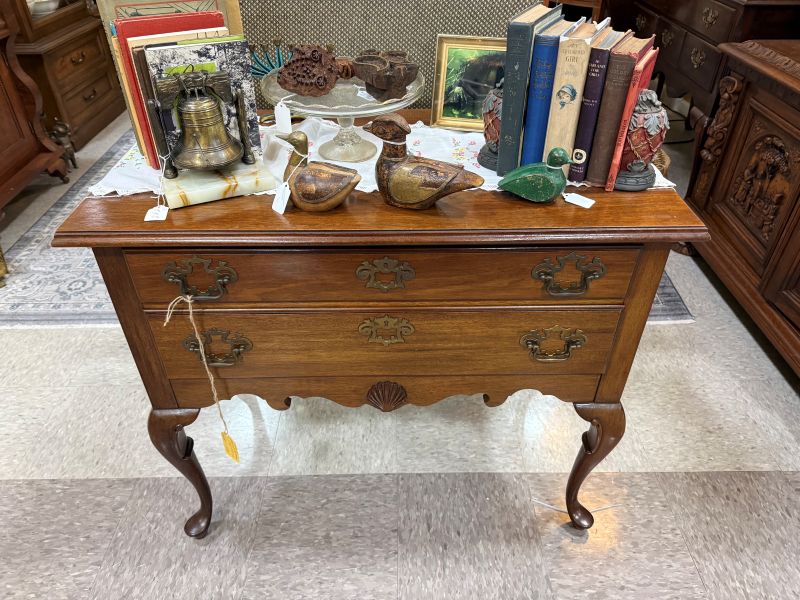
Fortunately, we have these brands with us today in some form or other. There are many others on the floors of these venues that are not: Harden, Henredon, Drexel Heritage, Pennsylvania House, Biggs, Statton, Maddox, Cresent, Mersman, Hekman, Craftique, Lorts, National of Mount Airy along with Lane and Broyhill, to name several. But pieces by these and other brands can be found at consignment, offering consumers young and old alike a glimpse at the quality and beauty they represented in their day and continue to represent today as they have stood the test of time.
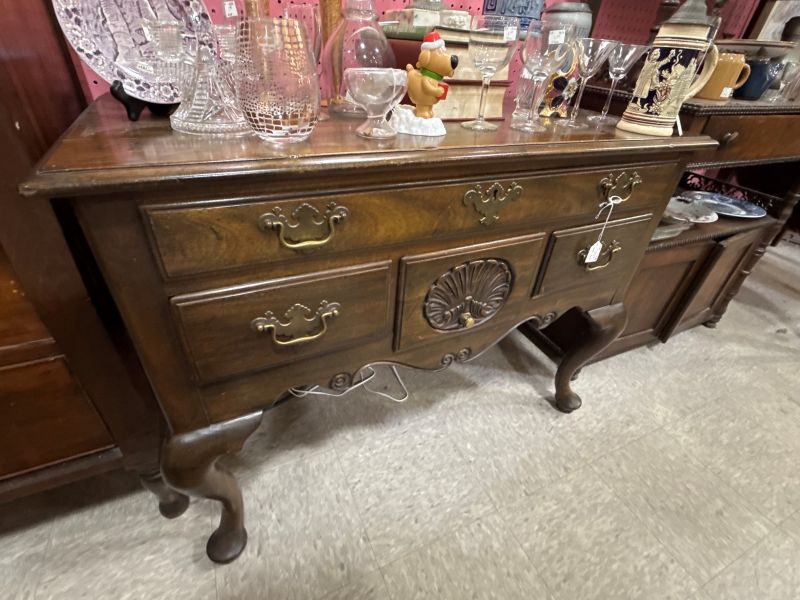
Of course, much of this is relative as beauty lies in the eyes of the beholder. Someone who is drawn to a midcentury modern form may not be drawn to a Chippendale-inspired Statton server or Henkel Harris lowboy piece in solid cherry featuring antique brass hardware. But that’s the beauty of the hunt for these and many other consumers shopping the aisles and booths of these marketplaces — they may not be able to tell you exactly what they are looking for but will let you know when they see it. The same is true if they were shopping any brick-and-mortar retailer in their own community.
There’s also other good news for younger consumers and new homeowners who are increasingly getting sticker shock not just on housing prices, but all the other expenses that go with a house — including real estate taxes and insurance. The prices offered on these heirloom quality pieces is extremely affordable, relatively speaking, as they are often purchased at estate sales and even on Facebook Marketplace.
Of course, some pieces may not be in the best condition and require some touch-up or refinishing. But for some young consumers, that’s also part of the appeal, similar to the appeal of restoring old cabinets or flooring in their home. Even before it went by the wayside following the bankruptcy of Heritage Home Group, Henredon would refinish or repaint brand-new beautiful wood pieces in its North Carolina custom finishing facilities. This allowed customers to put their own stamp on an item, similar to what they experience with a custom finish or fabric available from domestic manufacturers still in business.
Again, not every consumer young or old alike sees value on heirloom furniture or brands. It’s why so many retailers have capitalized on making themselves the brand. However, many younger consumers today have been brought up to appreciate the type of fine furniture seen in their parents’ and grandparents’ homes. And when they see something similar at consignment, they recognize and understand the appeal.
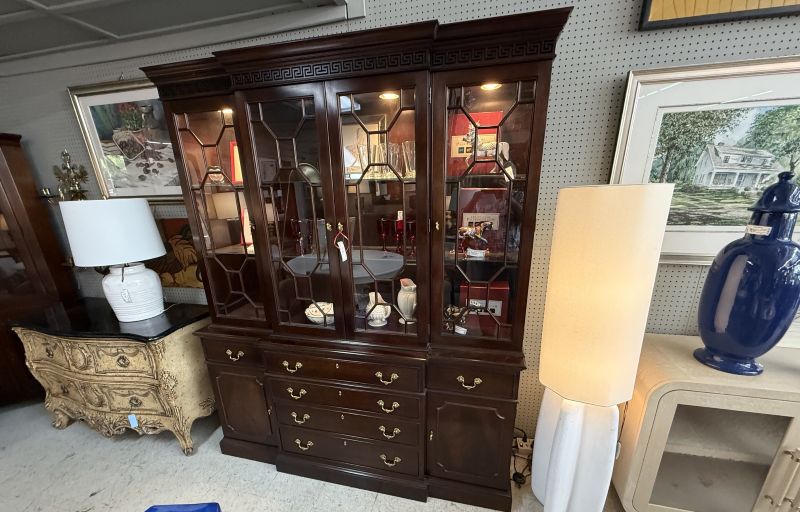
Will there continue to be an emerging market for this type of product? That remains to be seen. But here’s an analogy that made sense to me as we discuss the quality of storied brands and U.S.-made furniture.
My 19-year-old son — like many other younger music fans — is a fan of vinyl LPs. You know the kind of things you bought on sale at the Nice Price of $3.99 and $4.99 that now sell for $24.99 and up? Recently he listened to my old version of Dark Side of the Moon, purchased in 1982. He said the sound quality blew away the sound quality of the newer version purchased just last year. I was astounded. But it eventually sank in and made sense. It’s the same thing many young people are discovering about furniture. If you don’t agree, then just look at some of the prices heirloom quality furniture is being sold for on Etsy, Chairish, 1st Dibs and Kashew, to name several.
As he’s gotten a nice collection of more than 180 albums, my son is now looking for a better place to store them than the cheap, inferior quality crates being sold online that are bound to fall apart with repeated use.
Earlier this year, I showed him a piece of furniture I saw at consignment which would be perfect to store his albums, but also would hold up over time. His response? Not that he didn’t want it, but rather where would he put it in his already crowded room?
We’re not sure what this means for brick-and-mortar stores or e-commerce specialists like Amazon or Wayfair. But if they aren’t getting in on the game, the news might not be good, particularly as more and more young consumers don’t mind the idea of buying quality, second-hand furniture.



Another great article Tom.
I had no idea that consignment was such a big deal especially among young people. I just started going to antique shops in Palm Beach and I am seeing things that I have never seen before as well as very cool things that I haven’t seen or thought of since I was a kid