 by
by Home News Now offers 7 key takeaways from June 3 panel discussion
CHARLOTTE, N.C. — At this year’s Furniture Manufacturing Expo held here at the Charlotte Convention Center June 3-4, educational sessions were a key part of the offerings. Among those was a panel on the challenges and opportunities seen by domestic furniture manufacturers in and around the Hickory area of North Carolina.
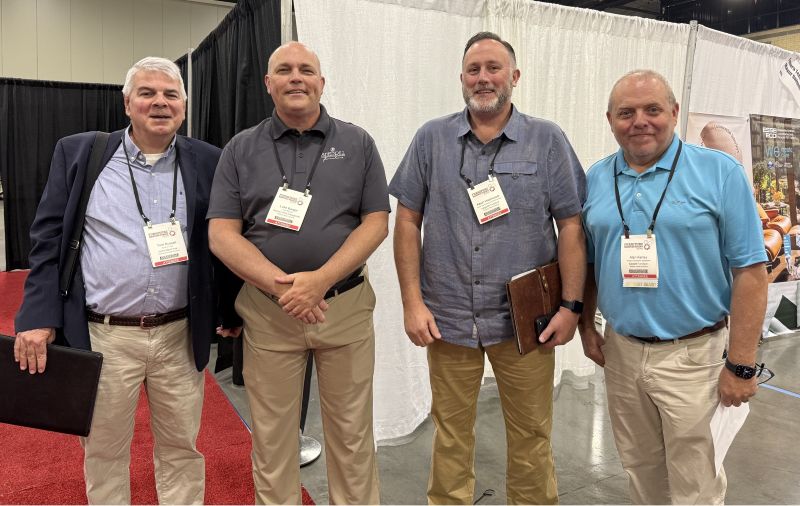
Moderated by Home News Now Editor-in-Chief Tom Russell, this discussion was possible thanks to the participation of three longtime manufacturing experts who shared their insights on the issues at hand. They included Alan Kerley, director of upholstery operations at Bassett Furniture; Kevin Holshouser, senior vice president of Vanguard Furniture; and Luke Barger, case goods plant manager at Sherrill Furniture/Hickory White.
From that discussion emerged several key takeaways that offer timely insights into domestic wood and upholstery manufacturing.
- Tariffs have renewed interest in domestic manufacturing as they help level the playing field on U.S.-made products. This has impacted producers in terms of demand from retailers and also OEM customers that are looking for products they can sell to the marketplace at a value. Both scenarios have taken up some capacity as there has been some increase in orders over the past year or longer that tariffs have been in place. While domestic manufacturers are impacted by tariffs on some imported raw materials such as fabrics, they also source a lot of materials domestically, including wood frames and other wood components made in the U.S.
“Our core business has been strong and we have had an increase in OEM business with folks that may have been getting product from overseas,” Holshouser said. “They have been coming to us asking if we have the capacity to make that product. And just looking at the effects of that, we ask ourselves if that is going to be a short-term or a long-term thing. We are always interested in growing, but are not looking for short-term, but rather long-term business coming in.”
2. Quick turnaround times continue to be an advantage for domestic manufacturers. Particularly with custom-built product, manufacturers can turn around orders within a few weeks or less depending on the complexity of the item. This creates a high level of interest from consumers that want to receive their product as quickly as possible. With imports, unless the item is in the warehouse, they will be waiting not only for it to be produced, but also for it to be shipped on a container from overseas, typically adding at least three weeks on the water.
“Obviously we are still dealing with tariffs in bringing in components from overseas and to some degree that is affecting things,” Kerley said. “But one thing that is really helping us is our lead time. So on our custom end, it is out the door in seven days on average and 10 days in a worst-case scenario. But we also have a little bit of a stocking program because we have some styles that we see selling better than others. We have this stationed at four locations around the country so we can get it turned a little quicker, depending on how fast you want it.”
3. Designer business continues to grow in importance. For domestic manufacturers offering custom-built product, this is nothing new. However, designer business is moving the needle as more of these resources become go-to resources for their flexibility and design aesthetic. It also is important for brick-and-mortar retailers that offer design services as part of their mix. Whether it be the selection of fabrics, a leg style or a wood finish, the marketplace is responding to consumers’ demand for exactly what they want and not what’s simply available on the floor, which is the case with most imported product.
“We are seeing a lot more foot traffic with the designers coming in and getting involved in the business, and I hear that across the board,” Kerley said.
“For many years, our company has done business through big-box retailers, and the majority of our product has gone to dealers’ floors and different furniture stores,” said Barger, of Sherrill Furniture. “But as that has continued to decline, we are starting to reach out more to the designer side of the business.”
“For Vanguard, designers are our core business,” said Holshouser, adding that retail and OEM also remain important. “We try to have our hand in each one, but designers are the core of our business and the stability of that over the years has paid dividends for us.”
5. Domestic producers face continued cost pressures, whether through tariffs on components or rising materials costs overall. This has caused many to seek opportunities to build relationships with new vendors or vendors they may have not done business with in several years. For these and other producers, it helps in the procurement of raw materials and components at a lower cost and that helps determine how competitive they will be from a pricing standpoint on their own finished product. Building upon those types of partnerships — new or ongoing — is also why many were shopping the Furniture Manufacturing Expo.
“My biggest focus for the past year and also the last few months has been on cost savings,” Kerley said. “I have spent the majority of my time trying to find the savings so we don’t have to pass that (price increases) along to the customer to such a high degree. That is something I have spent a lot of time with, and finding those savings has been very beneficial.”
6. Investment in new equipment also has been a key to remaining competitive. But so has finding the right people. With much of the work force aging out, a key goal has been to get new talent coming in the door who want to work in a plant setting. And if the person does not have experience in the field, it also means taking time to train those new workers whether as a sewer, a frame builder, an upholsterer or someone finishing the wood components. Experienced staff also are key in helping the new workers get trained and up to speed, so this requires a culture in which people are willing to work together.
“I think our biggest challenge on the case goods side is finding skilled labor,” said Barger, noting that investments in technology and new equipment can help fill some of the gap. “For the case goods side of the business, to be viable as a domestic manufacturer, you have to come up with the right product and then you have to find people to make the product. One of my biggest time consumers is working with human resources in trying to recruit skilled labor. And then we have to invest in training with the other workers we have in the plant for the new people we bring on. It’s a constant challenge. It never goes away.”
“I agree and think that the three of us up here who have been in the industry 30-plus years, we are going to be training the rest of our careers,” Holshouser added. “Training is important and we are working with the local high schools in getting folks in here, including summer interns. But we are also having to invest in new technology because for the young folks that come in, that’s what they want to work with. So we find that is a good mix — to get these new people in at the same time we are getting new automated equipment so they can work side by side.”
7. AI is becoming increasingly important as a tool to help facilitate certain tasks. For each manufacturer, the technology has unique capabilities, and the goal is to try to find where it works best in the organization. It’s also important to make sure employees do not feel their jobs are threatened, but rather that it gives them the tools necessary to become more efficient and thus more valuable to the organization in the process.
“There are many people in our organization that have embraced it,” Barger said. “I have used it with many things myself such as writing a job description. I can input certain characteristics and traits I am looking for, and it will give me a pretty detailed job description and that saves me time and also doesn’t require our HR person to do all that type of thinking. It’s a great tool if used in the correct fashion.”
“AI is something we have embraced,” added Holshouser. “One of the big things we have seen with AI is the importance of educating our senior leadership and our managers about what AI is all about and not to be afraid of it and to embrace it. We also see it as a tool that can work alongside of them to help them be more productive and their team to be more productive.”
The execs also agreed that it needs to be managed in a way that is not threatening to workers.
“People do get nervous about it threatening jobs, but I think it’s a tool that can be used very extensively, even in the design phase of furniture. … It can be scary to folks, but it is a tool that can be used and that can be very helpful if used in the right way,” Barger said.