 by
by Sam Raksin and Yossi Majer purchased the company earlier this year, continuing a legacy that dates back to 1980
NORTH WILKESBORO, N.C. — When Sam Raksin and Yossi Majer purchased furniture manufacturer Johnston Casuals earlier this year, they saw big potential in a niche business that has been serving customers for more than 40 years.
Today the company operates out of about 110,000 square feet of manufacturing space in North Wilkesboro that produces a line of dining furniture that includes tables, chairs, benches and bar stools, along with occasional and accent tables, etageres and room dividers that combine metal frames with wood and glass tops and shelving.
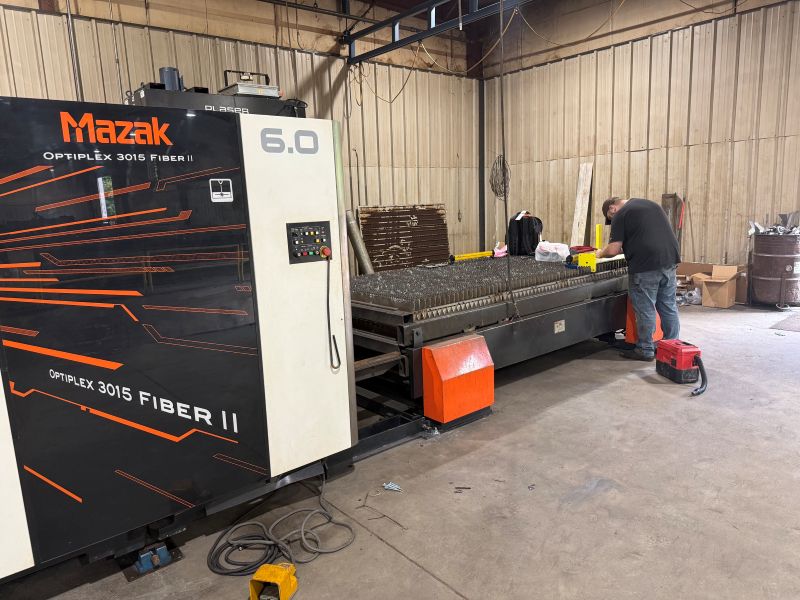
This is made with sophisticated CNC and bending equipment that produces a mostly contemporary and modern design aesthetic that appeals to many customers — young and older alike — in the marketplace.
The goal moving forward is to continue producing those and other products in a way that supports the manufacturing operation and its 35 workers while serving the needs of customers throughout the U.S.
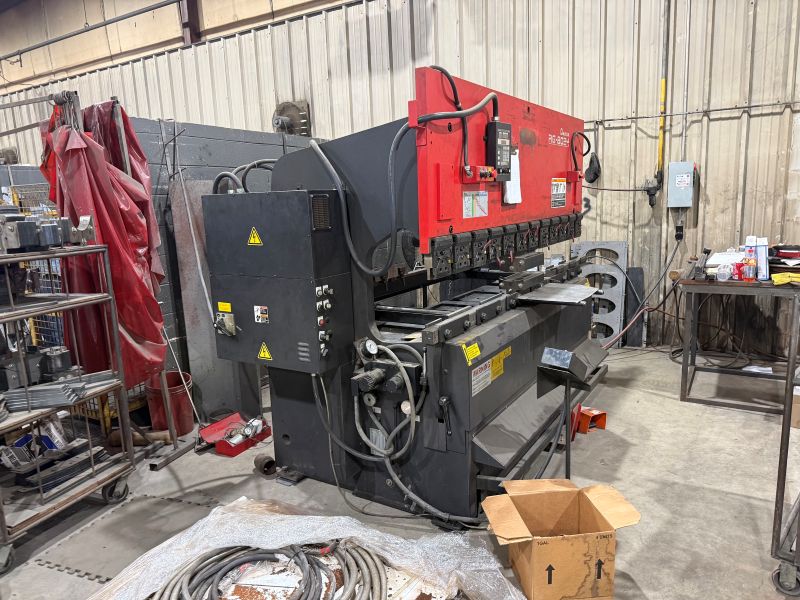
It’s a balancing act that Raksin, company director of business development, said will include investment in new equipment and adjusting some of the company’s manufacturing processes to serve the needs of customers with both quality and speed.
Some of that shift involves moving from a large batch manufacturing process to a build-to-order model that taps into the operation’s custom finishing capabilities, along with custom seating in finishing and fabric.
During a tour of the facility in late June, Raksin showed Home News Now some of the equipment the factory has been using for decades. While still functioning, the goal is to add new equipment ranging from laser cutting machines that cut sheet metal to new bending equipment.
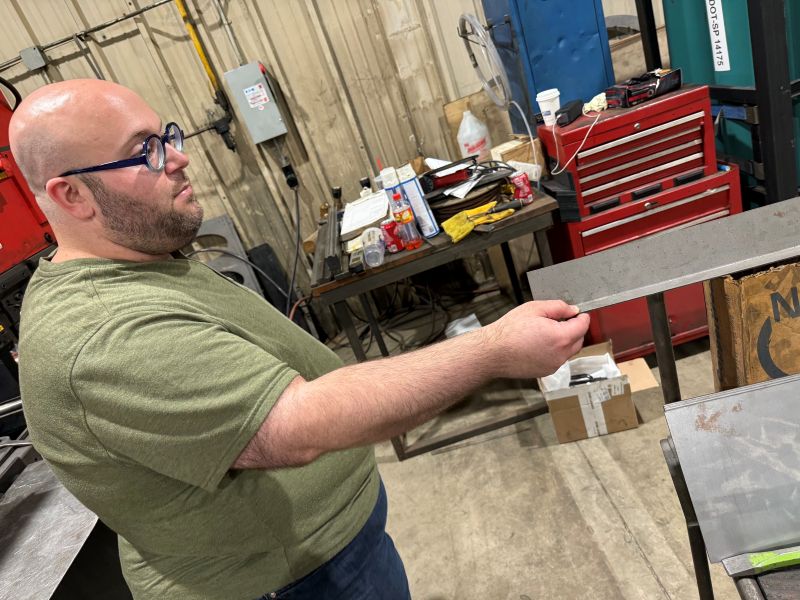
“To fully modernize the place, it will take a couple of years,” Raksin said. “It will probably take $3 million to $5 million in equipment and improvements to the building. … The idea is to retrofit the whole factory and rebuild everything.”
He also noted that the ability to service some of the original equipment is limited because of its age.
“Efficiency is always the key part,” he added about the end goal of these investments. “A lot of the equipment that is here, when it was purchased and installed, it was top of the line. Now we are 20-30 years later since the last big capital investment.”
“Obviously a new CNC machine will get us a lot further,” he said of the need to replace certain equipment. “So we are working based on what the priorities are.”
The company also wants to boost the utilization of the facility by increasing orders on both the residential and hospitality side of its business. An estimated 40% to 50% of the orders coming through the plant are OEM business for other manufacturers and the rest is for its own product line, both on the residential and hospitality side.
Some of the interest is because of the company’s abilities as a domestic manufacturer in a business environment still impacted by tariffs.
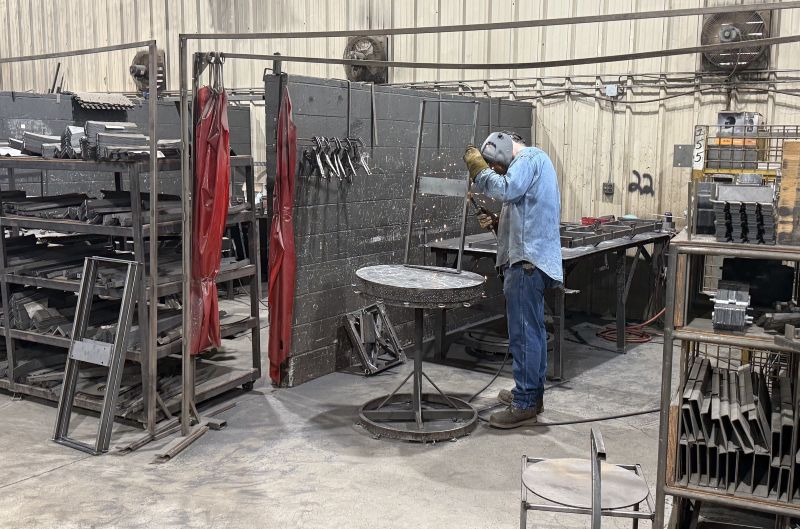
“Utilization hasn’t changed — it is still at about 10% of capacity, but we are receiving a lot of positive interest and feedback,” Raksin said, adding that while there is still uncertainty around tariffs overall, “the new tariffs on Canadian imports allows us to be competitive. … “And we have invested heavily to bring back furniture manufacturing to North Carolina just as President Trump has mentioned.”
Such investments in equipment and process improvements also aim to reduce lead times. Raksin said its standard lead time is now around four weeks, with some more complex products requiring more outside work or materials being four to six weeks.
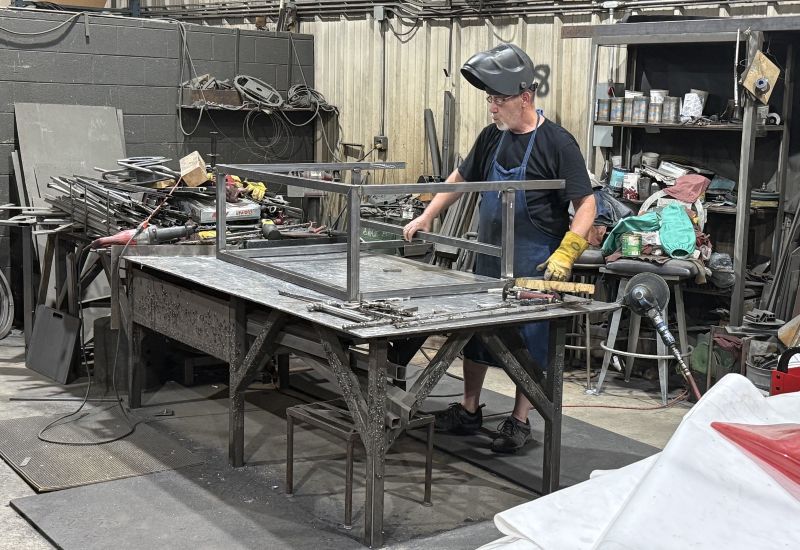
“With the right equipment, upgrades and investment, we are hoping to bring lead times down to two weeks, and we hope to offer a quick-ship program for some items with more standard finishes in seven days or less,” he said.
And to keep workers busy with as many hours as possible, it is also assigning them tasks that may be outside their regular production jobs.
“Those who want to work, we are giving them other opportunities to fill the hours,” Raksin said. “There is always something to be done — cleaning up, organizing, whatever it is. If you do not want to do something that is not your job, I can’t guarantee your hours, but we will do the best that we can.”
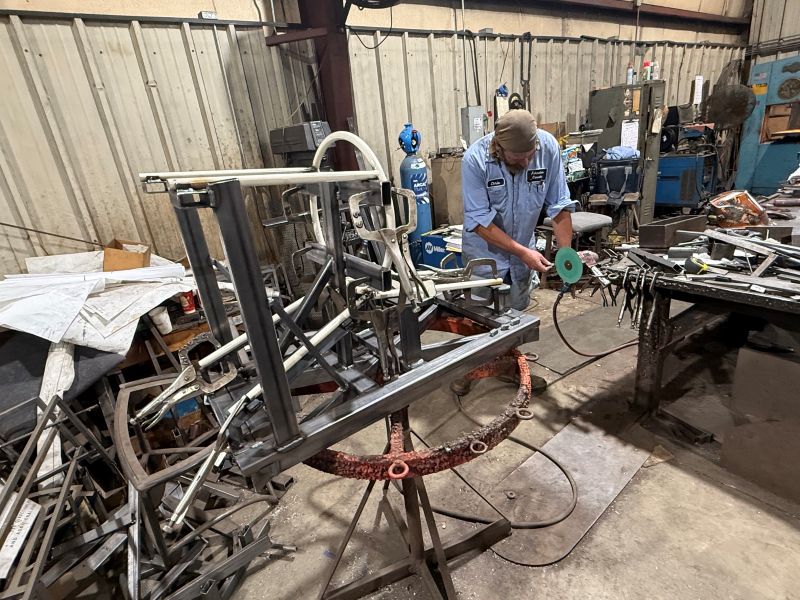
Reception in the marketplace has been positive thus far, the owners noted, as the company offered some 15 new powder-coat finishes and 100 new fabrics, vinyls and leathers at the April market, half of which were new fabrics. All this was done in roughly two months from the time of the company purchase to the April market.
There also will be new wood finishes and glass colors added in time for the October market.
“Johnston Casuals always has had a solid reputation for quality and customer service, and people are really excited to have more products to buy now,” said Vice President Majer, who runs the sales side of the business. “I have opened lots of new accounts. Old customers that no longer carry the line are starting to order floor samples and stores that already carry the line are expanding their offerings and floor models as well.”
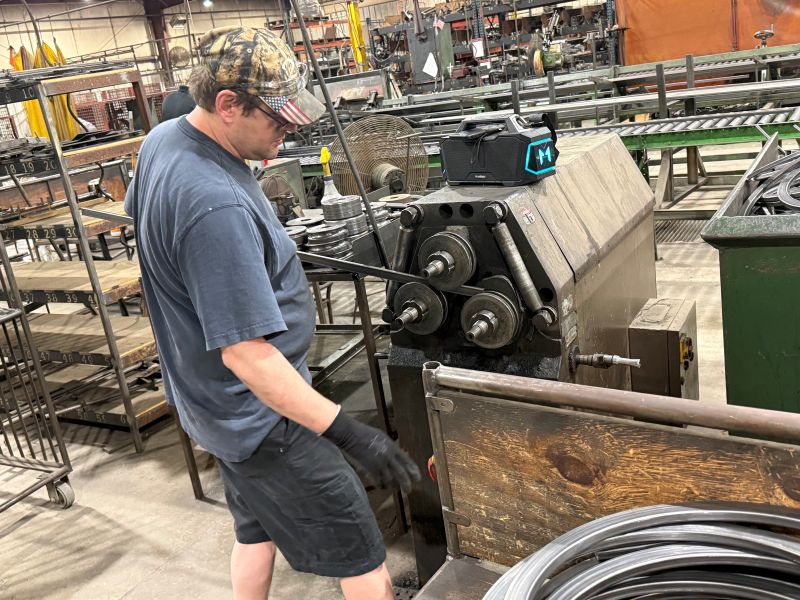
The company is also keeping as much of its materials supply chain domestic as possible, which also helps reduce lead times.
It’s a model that the principals believe will serve their customers now and in the future as more customers come to rely on the company’s domestic value proposition.
“People are really appreciating all the different finishes and customizations available for an American-made product, with short turnaround times,” Majer said, noting that tariffs also are working to its advantage. “Lots of the larger chains are considering doing more business in the U.S. because of all the uncertainty and delays.”
Former president and owner Joe Johnston, a third-generation furniture executive who was part of the family that started American Drew, has remained on board in a consulting role following the purchase of Johnston Casuals this February. He said that he decided to sell the company as none of his children chose to be in the industry.
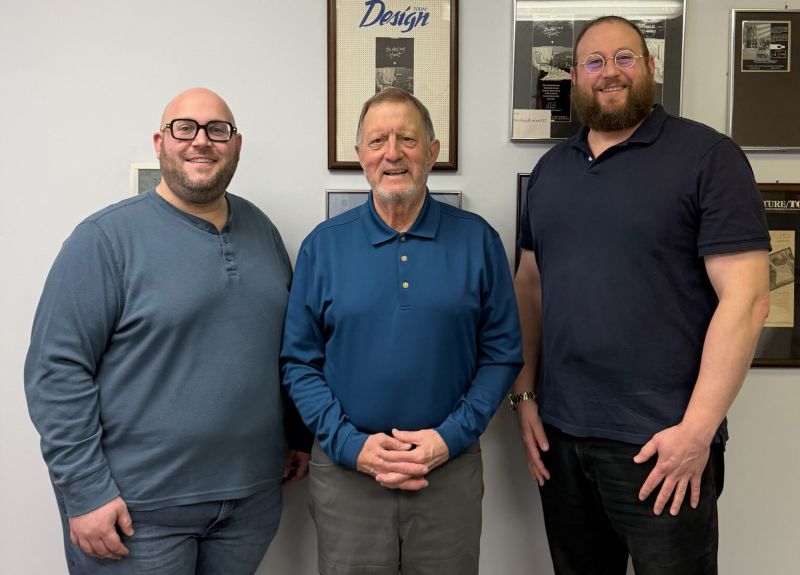
“It was a breath of fresh air that these two semi-young business executives became available and showed an interest,” he said, noting that the deal closed after roughly a year from the initial introduction. “After a year, we got together and I am happy to be able to retain the workforce that I had and also to continue with the name Johnston Casuals.”
So does that make Raksin and Majer the fourth generation? They would gladly accept that “adopted” place in the family history, particularly as they plan to sustain and make the business successful over the long term.
Raksin, who is more closely tied to product development and operations, has an e-commerce background, including serving as president and chief executive officer of online reseller Fair Trade International for nearly eight years.
Yet he noted he has always been interested in the idea of building and creating something from the ground up, an opportunity that presented itself with this historic furniture line.
“I see potential in every corner of the business and everything that we do,” he said. “The first time I talked with the broker about this, it felt right. It has been just over a year, but we pulled through. I can figure out a way to make money; just give me the tools. It is not retail — it is something else. But we have the capability to do what we want with it.”