
 by
by Consumers who appreciate brand names, quality and traditional designs are finding all this and more at very affordable prices in antique marketplaces
Editor’s note: This is the first in a series of upcoming columns discussing the implications of consignment furniture sales on the industry.
GREENSBORO, N.C. — After having covered this industry for more than 25 years, there’s a lot that starts to sink in, particularly the value that certain furniture holds for those who appreciate both quality in finish and construction.
This includes well-known brands, some of which have gone by the wayside through bankruptcies, closures and even the sales of companies that ultimately never materialized into a long-term platform for success.
E-commerce platforms such as Etsy, Chairish and 1st Dibs, not to mention eBay, are just a few sites that recognize the importance of brands, carrying not only a wide selection of gently used furniture but charging a premium for these products in the process. The model appears to be successful as viewers can do a search for items by name and check out reviews from other customers that share their thoughts about the seller, the product and the overall shopping experience.
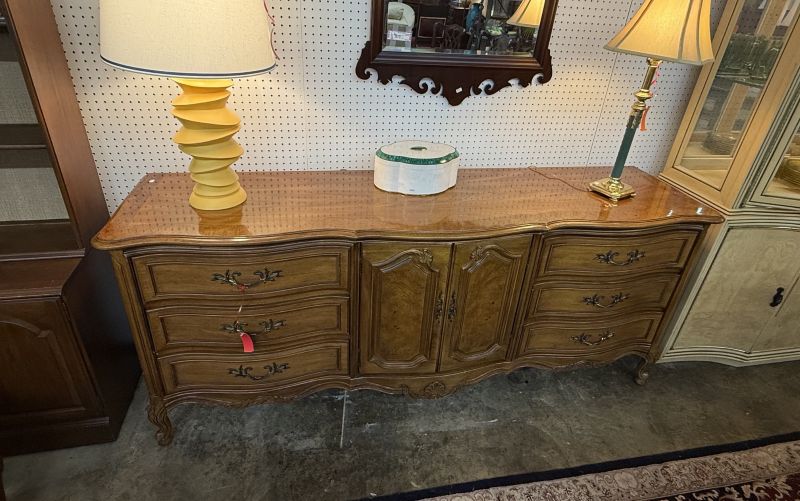
In some cases, particularly on eBay, customers can bid on certain items, suggesting a price that may or may not stick, but that’s always worth the effort as the seller may accept or come back with a lower figure than the original sales price.
It’s an exciting prospect for those seeking quality furniture as they not only find cherished brands — some of which are still with us — but also an extremely affordable price they can sometimes negotiate with the seller.
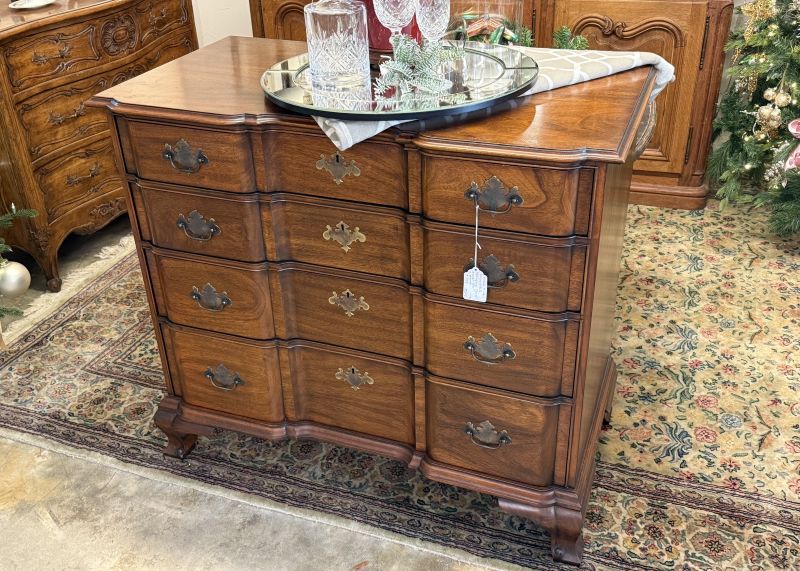
The same is true at consignment and antiques stores, many of which offer even better deals for consumers in their local markets. In fact, many of these products can be found at a fraction of the cost they were sold at brand new, thus making historic, high-end luxury furniture attainable to the masses.
Yours truly, who has come to know and appreciate brands through countless showroom visits over the years, experienced this first hand in recent months during visits to several consignment/antiques stores. The Kindel chest at right was purchased this past December for just over $500. A good friend and well-respected case goods source in the industry shared that brand new, this piece would cost about $5,000.
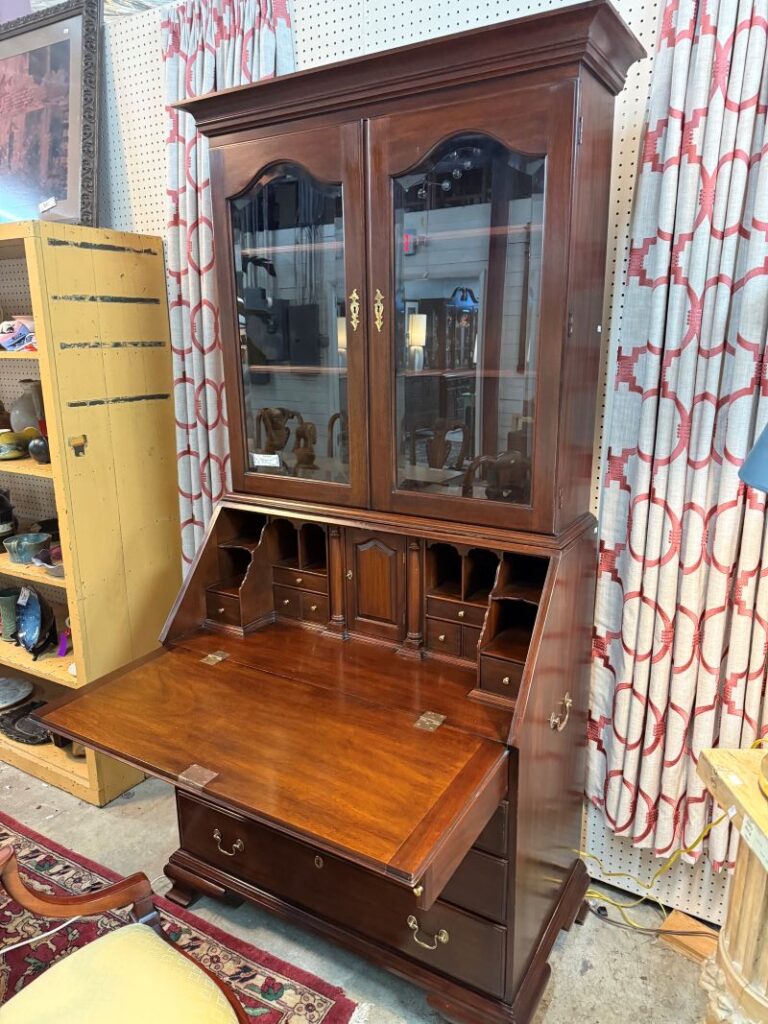
The same is true for a Henkel Harris secretary purchased at consignment, also shown below, for just over $1,000. Another well-respected source told me sometime back that these types of pieces would retail around $10,000 or more brand new back in their day.
The hunt for fine furniture unwittingly started with the purchase of smaller gifts, such as antique Tiffany lamps and other trinkets for birthdays and Christmas. But just as those who visit venues like the Atlanta Market have long experienced, those smaller items which also include glassware, fine china, teacups, picture frames, vases and even holiday-themed items such as nativity scenes, tend to cover and thus hide mostly higher-ticket goods such as furniture.
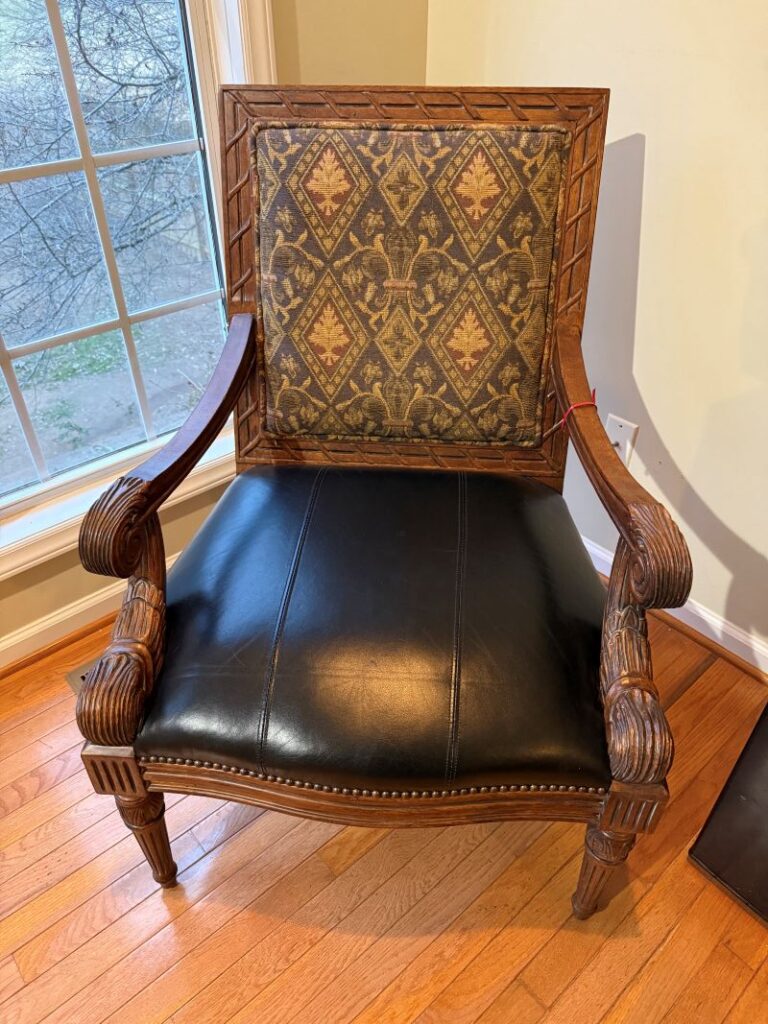
And this is where the real treasures were found in names such as Henredon, Thomasville and Drexel (all victims of the Furniture Brands and later Heritage Home bankruptcies,) but also — take a deep breath — Bassett, Hooker, AICO, Liberty, A-America, Hancock & Moore, Pulaski, Harden, Theodore Alexander, Bernhardt, Flexsteel, Hekman, Davis Cabinet, Ethan Allen, Fancher Furniture, Link Taylor (along with Young-Hinkle, both produced by Dixie Furniture, the company founded in 1901 and run by Henry Link that later became Lexington Furniture Industries), Kittenger, Kindel, Century, Maitland-Smith, Henkel Harris, Lorts, Hammary, Kincaid, Sherrill, Fairfield Chair, Councill Craftsman, Universal (remember Alexander Julian?), Craftmaster, White of Mebane (later to become known as Hickory White), Hickory Chair, National of Mount Airy, Craftique, American Drew, Stanley, Pennsylvania House and Cresent, to name several. I’m sure there are plenty others I am forgetting because they are all out there, alive and well in these consignment and antique marketplaces.
Many of these names are still active and sold in the today’s retail marketplace, including even Thomasville and Henredon, which have seen a renewed albeit somewhat limited existence on the floor and website of Costco.
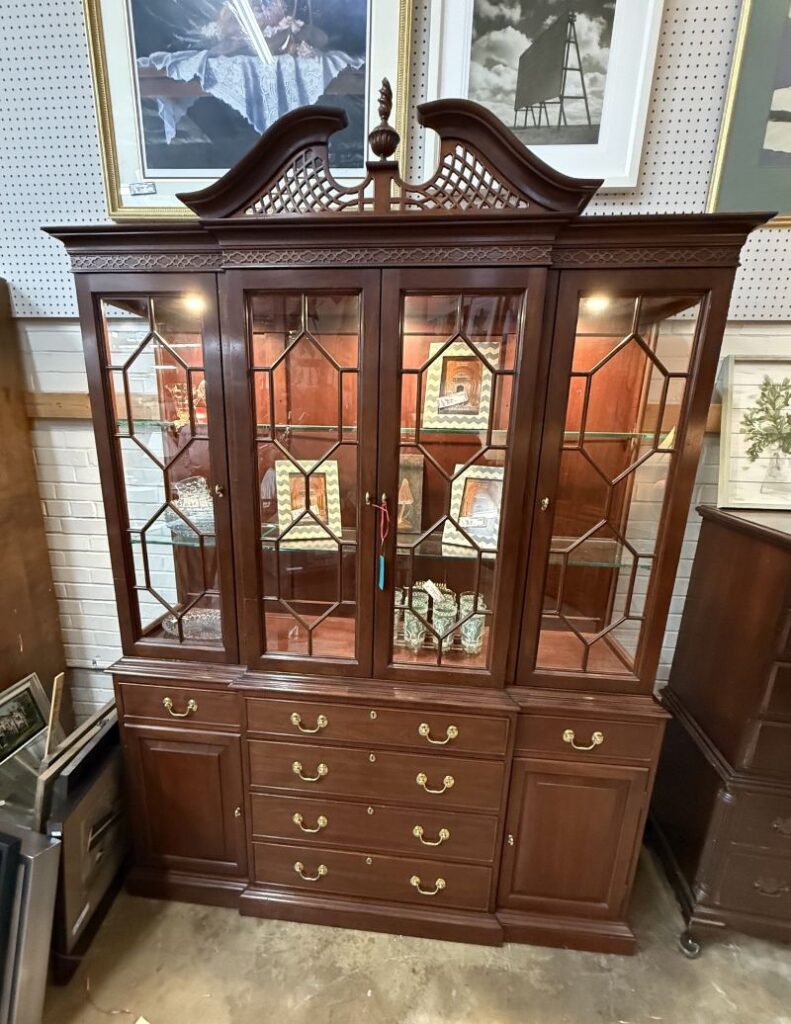
But the real Thomasville and Henredon we know and love are found not at Costco, but rather in the halls of antique and consignment furniture stores.
Others such as Harden, Craftique, National of Mount Airy, Pennsylvania House, Lorts and Cresent unfortunately are among those that have fallen by the wayside, their names a distant memory in the minds of many consumers.
Others still are even more obscure even to the author of this column, who thought he knew most every brand in the industry. Ever heard of Biggs, Maddox, Knob Creek, Brandt, Columbia Manufacturing Co. or Statton? I personally hadn’t either, but quickly read up on them when I saw the beauty and quality of the pieces on the floor of these consignment specialists, thanks to various estate sales.
+ Biggs was a Richmond, Virginia-based manufacturer of mostly reproduction furniture that began selling antiques around 1890. It was purchased by Kittinger Furniture of Buffalo, New York, around 1974 and eventually faded from public view in subsequent years. Online sources describe the company as one of the renowned 20th century Virginia wood furniture producers, while also noting that it largely was known for its colonial reproduction furniture.
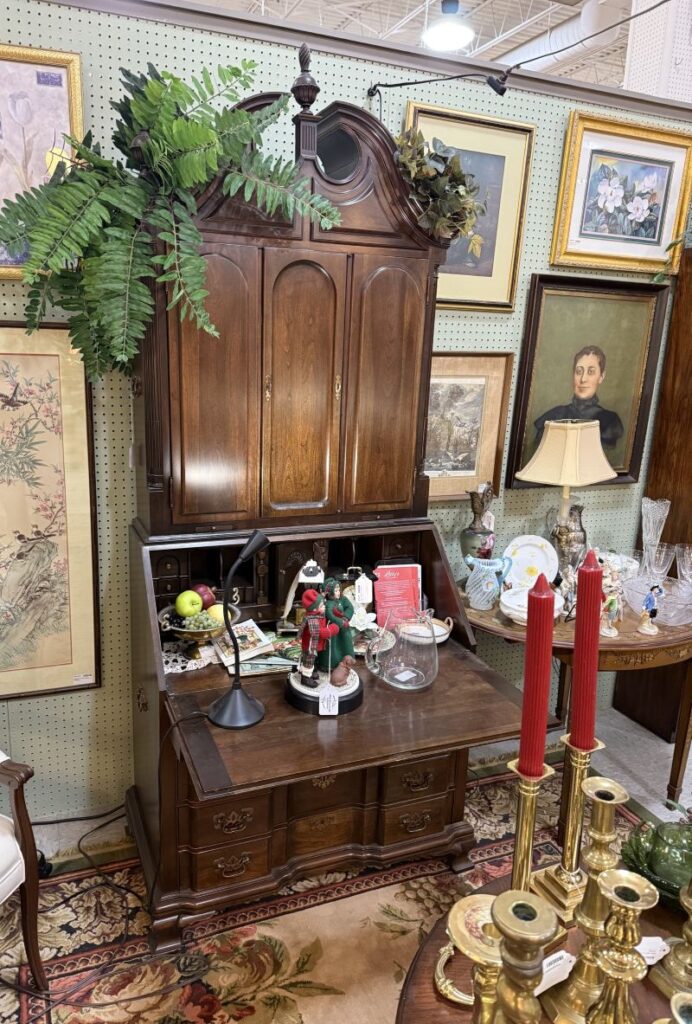
+ Statton Furniture was a family-owned company that produced furniture in Hagerstown, Maryland. It was in business from 1926 until 2008. In addition to bedroom, dining and occasional furniture, it was known for its stylish accent pieces, all made mostly with solid wood components. Signature items included bedroom pieces such as highboys and dressers as well as dining and occasional tables.
+ Maddox was founded around 1898 by William Maddox, the son of an English immigrant. Long based in Jamestown, New York, it specialized in solid bedroom furniture as well as tables and accent pieces such as secretaries with drawer and shelf storage. It ceased operations around 1985.
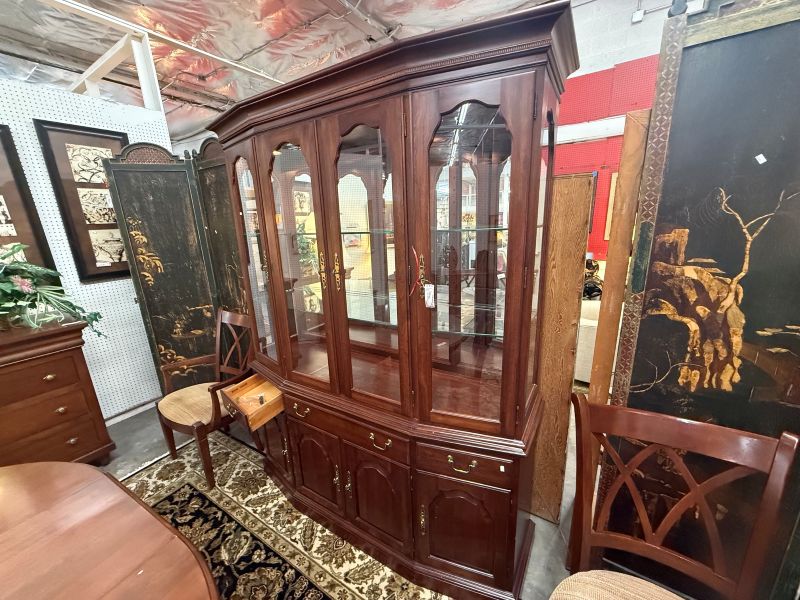
+ Knob Creek was founded around 1963 in Morganton, North Carolina, and became known for its line of solid wood dining, bedroom and accent furniture. Clarity of finish was one of its hallmarks as it showcased the beauty of the wood grains, highlighting its use of species such as solid cherry. In 1979, it became a subsidiary of Ethan Allen, which later discontinued production of the line in the 1990s.
People looking for quality furniture will find it in these and other well-known brands with a storied history that continue to show up at consignment stores. (Editor’s Note: Our Consumer Insights Now research shows that roughly 8% of higher-income consumers earning $150,000 or more shop for furniture at consignment stores. We suspect that an even higher percentage of those earning less also shop at these resources given the bargains they can find.)
While perhaps only occupying a small percentage of industry sales, every community has one or more of these types of shopping experiences. And judging by the crowds wandering the floors, they have a following that is sure to be taking some market share from the deluge of cheap imports flooding the retail market.
Not everyone will be drawn to such a story in their furniture. But for those who do, there’s a wealth of product to be had. The question is, is there a place on your floor for this type of product? And if so, what impact could it have on your business? Feel free to share your thoughts with me at tom@homenewsnow.com.