 by
by The digital brand launches its new brick-and-mortar presence
SAN FRANCISCO — The phrase “retail apocalypse” has been around for the past several years, and although some companies have, sadly, gone out of business, there is a case to be made that retail is evolving, rather than outright dying.
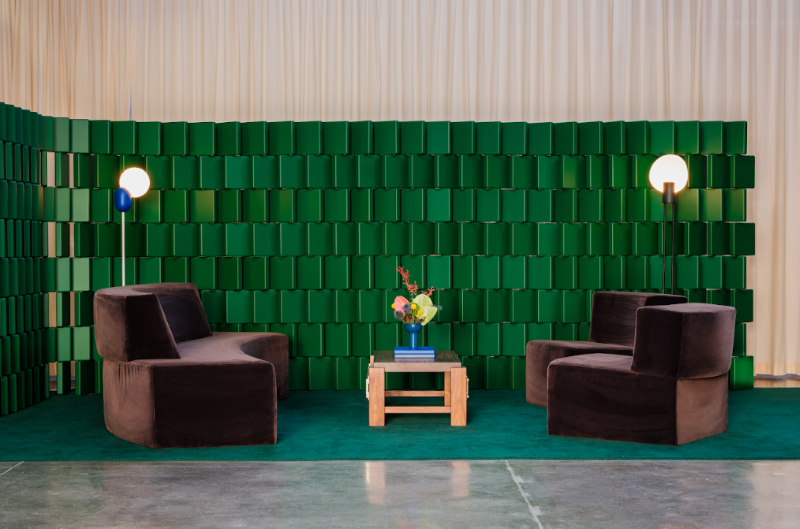
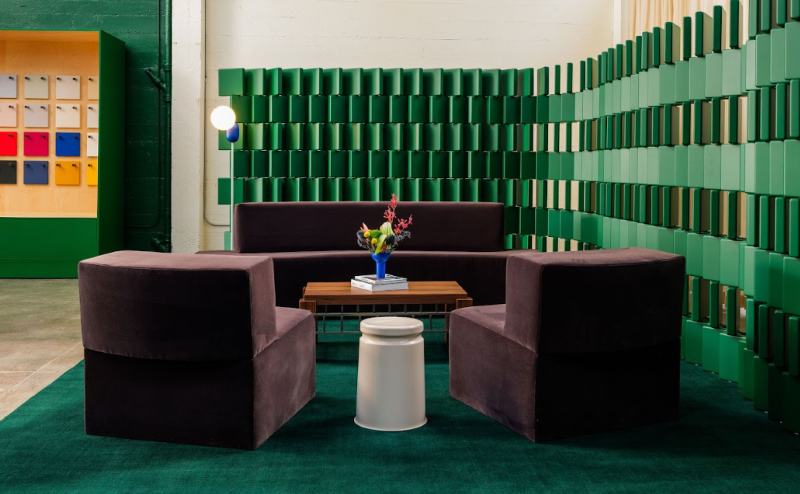
Digital furnishings manufacturer Gantri, which previously offered its products only online, recently invested in physical space. In January, Gantri opened its first brick-and-mortar presence, a showroom inside a 1920s auto body shop in San Francisco. That history inspired the showroom’s name, “The Shop.” Located at 320 10th St. in San Francisco’s South of Market district, the interiors of the 1,600-square-foot space are drenched in Gantri green, the brand’s signature color, similar to a kelly green.
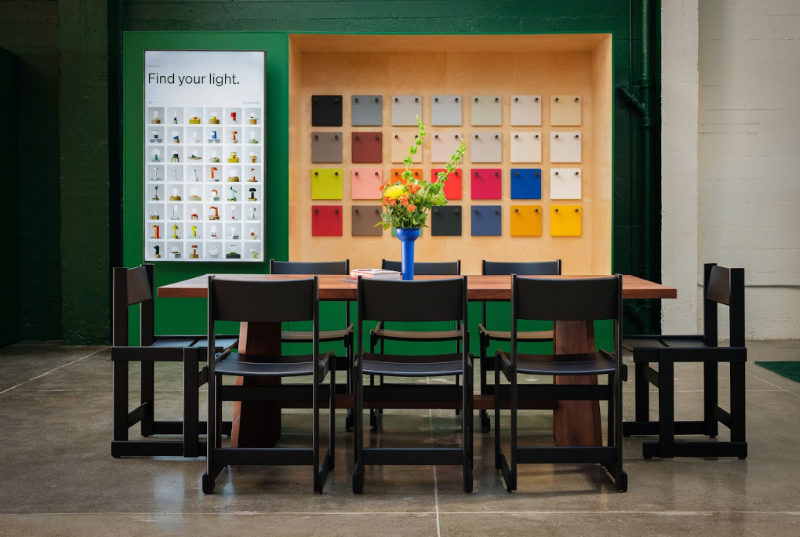
Inside the space, there’s a communal worktable with 10 seats and a seating area with velvet sofas and framed by a wall of 3D-printed tiles. Gantri’s new showroom is an example of the kind of experiential design that is becoming increasingly important to capture consumer attention in today’s retail economy. But beyond that, it’s an example of a space that fosters a sense of community and allows for collaboration that can’t be replicated online.
“The narrative that retail is dying is outdated; it’s the mediocre retail experience that is struggling,” said Ian Yang, founder and CEO of Gantri. “The Shop is proving this — we are already seeing high demand for appointments and a strong turnout for our events. By investing in a physical space, we are betting on the value of human connection and the sensory appreciation of design.”
Gantri utilizes 3D printing, robotics and software for its self-titled “digital manufacturing process.” Gantri’s products are made of plant polymers, including non-GMO sugarcane. According to Yang’s LinkedIn bio, the San Francisco-based company helps furniture brands cut new product development time and cost by 90% and sell without inventory.
“Gantri sits at the rare intersection of digital manufacturing and artful design,” Yang said. “By transforming an old auto body shop, The Shop — a symbol of traditional industrial labor — into a design hub, we are replacing the status quo with a new way of manufacturing.”
Yang continued: “The Shop is raw and industrial, yet refined by the presence of products, experiences and designs by local creators and in some cases enhanced by our proprietary technology. It shows that manufacturing doesn’t have to be opaque or distant; it can be local, global, sustainable and artfully integrated into our neighborhoods.”
In 2026, Gantri is also celebrating its 10th year in business.
“This milestone isn’t about a celebration of the past; it’s a moment of gratitude for the creators and the community that empower us,” Yang added. “The Shop represents a decade of evolution. By taking up a space that honors the history of its neighborhood and filling it with the future of design, we are bridging the gap between where we started and the resolve we have for what’s next in manufacturing. It’s a physical embodiment of our journey and our commitment to the design community.”