
 by
by Inventory losses, flooding and power outages stopped businesses in their tracks, but community support drove comebacks
ASHEVILLE, N.C. — Hurricane Helene made landfall on Sept. 24, 2024 with devastating force. And while the storm has long since dissipated, its presence is still felt in hard-hit places like Asheville, North Carolina.
Yet nearly a year and a half later, the community is an example of resilience and a testament to neighbors helping one another.
“All the large news networks went away after a couple of weeks,” said Danny Yelton, chief operating officer at retailer Carolina Furniture Concepts. “But the damage didn’t go away after two weeks.”
Yelton added: “Helene impacted everyone in this area. I mean it wasn’t just us. Everyone was affected. It was a big deal.”
Atomic Furnishing & Design, also located in Asheville, lost 95% of its inventory when water levels inside the store rose 15 feet. Despite the loss, the retailer secured a new location at 176 and 178 Broadway in downtown Asheville and reopened in December 2024.
Atomic Furnishing & Design carries a mix of vintage furnishings and art, and also supports local vendors who have booth spaces to sell their wares. For now, Megan Walsh, who owns the store with her husband, Todd Walsh, is focused on the future, rather than revisiting the past.
“We are incredibly focused right now on keeping the business moving forward day to day,” Walsh said.
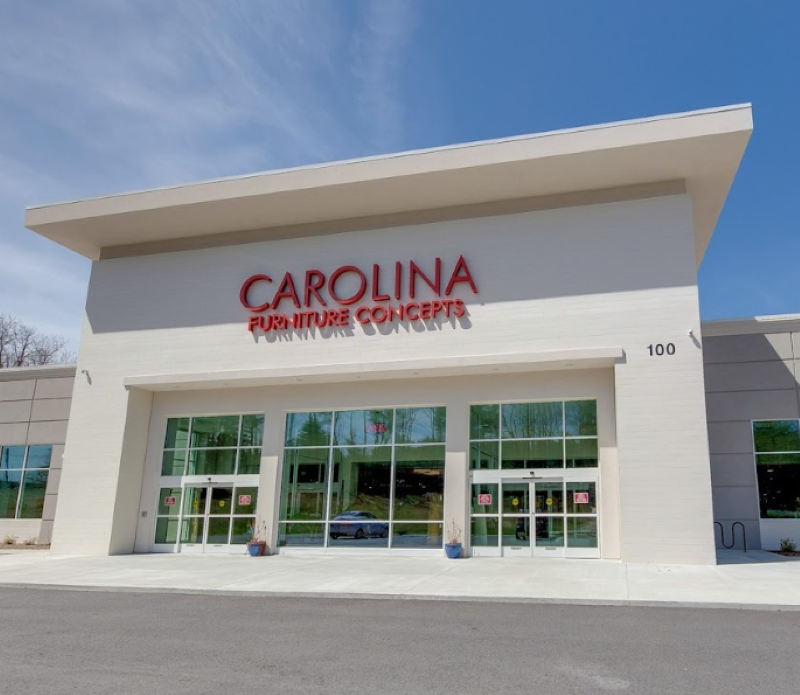
Carolina Furniture Concepts also experienced devastating inventory loss. Luckily, its two stores were minimally affected, but the company did lose electricity for a week and a half. However, its warehouse, which flooded despite not being in a flood zone, was decimated.
“We lost over $2 million worth of inventory in our warehouse,” Yelton said. “Because it wasn’t in a flood zone, we didn’t have flood insurance on it, so it was an uninsured loss. Being a small company like we are, a $2 million loss was hard to overcome.”
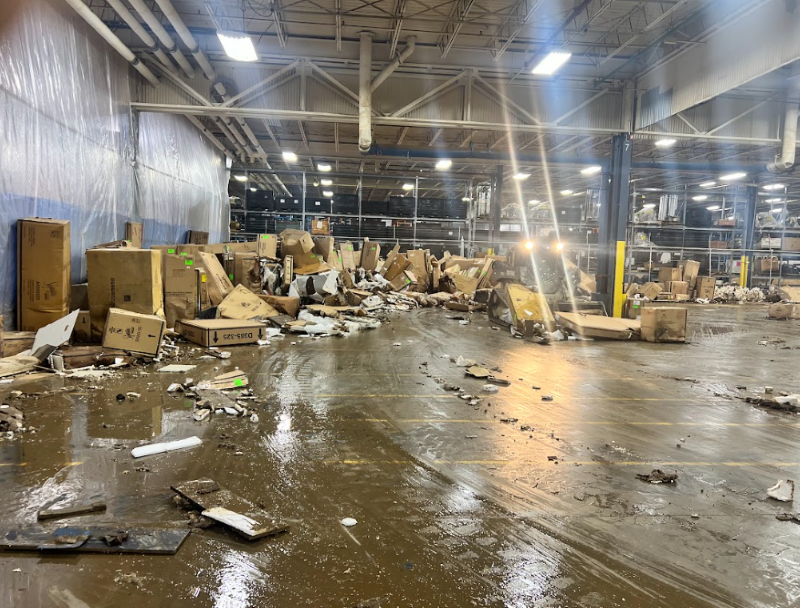
A week or so after the flood, Yelton said he, along with owner Sandeep Gupta, had lots of heart-to-heart conversations to determine what to do. Yelton recalled it was “hard to see a way out” in the immediate aftermath.
“We’ve had a lot of strategic sessions together, but that might’ve been the most important one we’d ever had when we were talking about, do we close the doors or not?” Yelton said.
“He’d been in business for more than 20 years, and it had taken him that long to build up an inventory level that size,” Yelton said. “Coincidentally, large inventory is how we’ve always approached our business. It’s what sets us apart from the competition.”
Because of the flood, however, Gupta and Yelton wondered if they could continue to operate.
“The owner and I are both in our mid-50s, and we decided that there wasn’t anything else we wanted to do at this point,” Yelton said. “We like selling furniture. It’s a fun business to be in.”
But the main impetus for reopening was for the employees.
“(Sandeep) couldn’t shut down knowing he would be putting 28 people out of a job,” Yelton said.
So they decided to go all in. Both he and Gupta spent the next month at the warehouse, clearing debris as nothing was salvageable. There were no sales in October 2024. After a month, Carolina Furniture Concepts was able to start receiving items in the warehouse again.
Because of rebuilding efforts, the company lost out on a lot of sales for November and December 2024, which typically would have been among its busiest months of the year. Yelton said the company “officially” restarted in January 2025.
“We started seeing business pick back up, and it wasn’t to pre-Helene levels, but it was getting there,” Yelton said, adding that they made “huge strides” in February 2025. “That’s when we started feeling like we were back. But then there were a lot of hiccups last year.”
Despite the slow restart, Yelton said that in November 2025, Carolina Furniture Concepts set a sales record for the company.
Yelton also credits the company’s vendor partnerships for its comeback.
“The vendors that we worked with helped us. They gave us better terms to pay back the payables on the inventory.”
Yelton credits its four primary vendors, Ashley Furniture, Best Home Furnishings, England and Flexsteel, for their help. And, of course, the Carolina Furniture Concepts team.
“Retail has a lot of turnover,” Yelton added. “But we’ve done a really good job of retaining people. We have a lot of good people right now, and it shows. They’re the reason we’ve been able to make these large strides as quickly as we did.”
Yelton added that although the company is flourishing now, they are still a bit shell-shocked.
“But we feel like we’re operating at a stronger level than we were before the storm already,” Yelton said. “And that’s just a testament to the people that we have at our store.”
Although rebuilding operations was a priority for Carolina Furniture Concepts and other affected businesses, recovery efforts extended beyond warehouses and showrooms and into the local community.
“We were part of that recovery, too,” Yelton said. “We weren’t just out to sell furniture.”
Yelton recalls people pitching in for food and clothing drives, and neighbors helping each other remove trees that were blocking paths.
“We’re all kind of benefiting from it now,” Yelton said. “The community’s coming back together, and downtown Asheville is recovering.”