 by
by Many of those surveyed say they plan to shop well-known retailers, but these stores need to be prepared to address their wants and needs
HIGH POINT — As we continue to analyze the shopping habits and preferences of high-income consumers, it makes sense to get their take on retail, which is the focus of our third installment of Consumer Insights Now sponsored by Bread Financial.
Certainly, while many work with a designer on projects as highlighted in last week’s installment, retail remains a key focus for many as that’s where they will see the latest styles in the marketplace.
A key takeaway is that more than seven out of 10 higher-income consumers who plan to buy furniture this year plan to shop for furniture at national furniture store chains. About 43% of those surveyed said they plan to shop at big-box retailers, and another 42% respectively said they plan to shop at local or regional furniture stores or home specialty retailers.
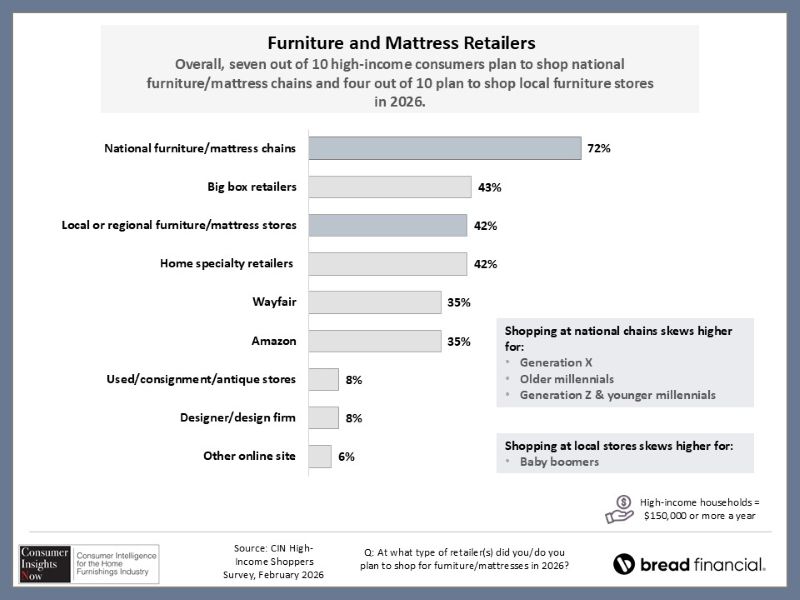
This was followed by 35% who said they plan to shop at Wayfair and Amazon, respectively. Another 8% respectively said they plan to shop at consignment/antique stores and 6% said some other online resource.
An advantage that larger brick-and-mortar stores have is in their availability of financing. Half of those surveyed they are interested in financing options such as a 0% interest, 36-month line of credit of up to $50,000. This not only indicates the amount of spending they plan to do, but also how much they want to hold on to their own cash for as long as possible.
With access to such financing, 37% of these consumers said they would purchase higher-end furniture, followed by 35% who said they would increase the size of their budget as much as three times, from $5,000 to $15,000.
Some 25% of those surveyed also said they would implement their design/redecorating projects on a shorter timeline, while 23% said they would buy furniture for additional rooms in their home.
In shopping brick-and-mortar stores, they also are seeking specific types of services including the ability to customize their furniture.
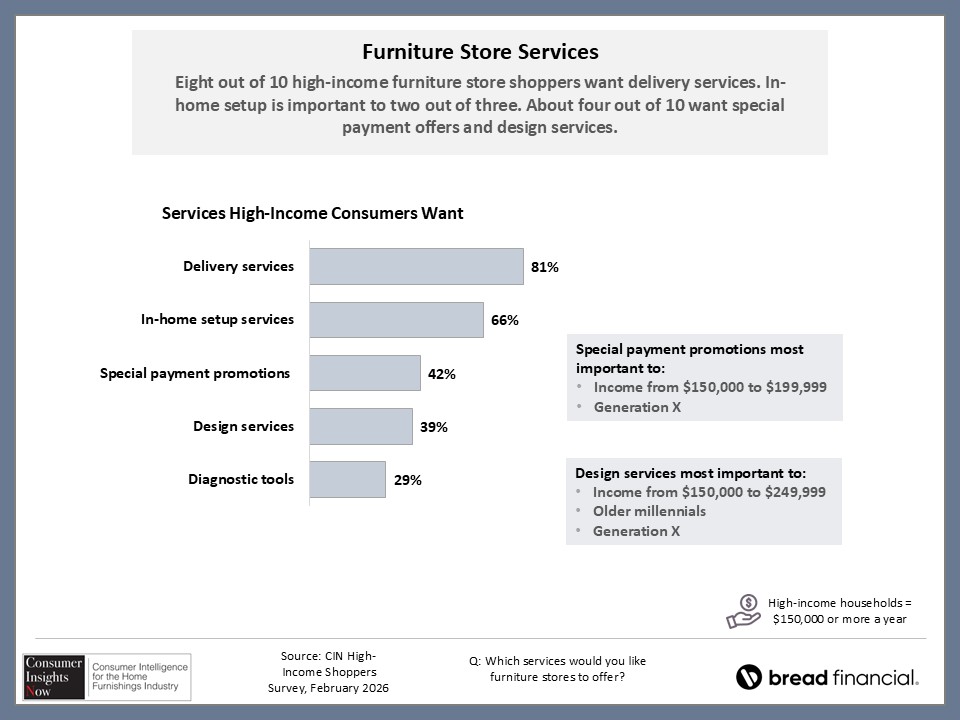
For example, nearly 40% of those surveyed said they want custom options, meaning they are willing to wait longer for what they want, compared with 61% who said they want in-stock availability, meaning they will put aside customization for speedy delivery.
The chart below outlines some of the customization that they are seeking, much of which applies to upholstery.
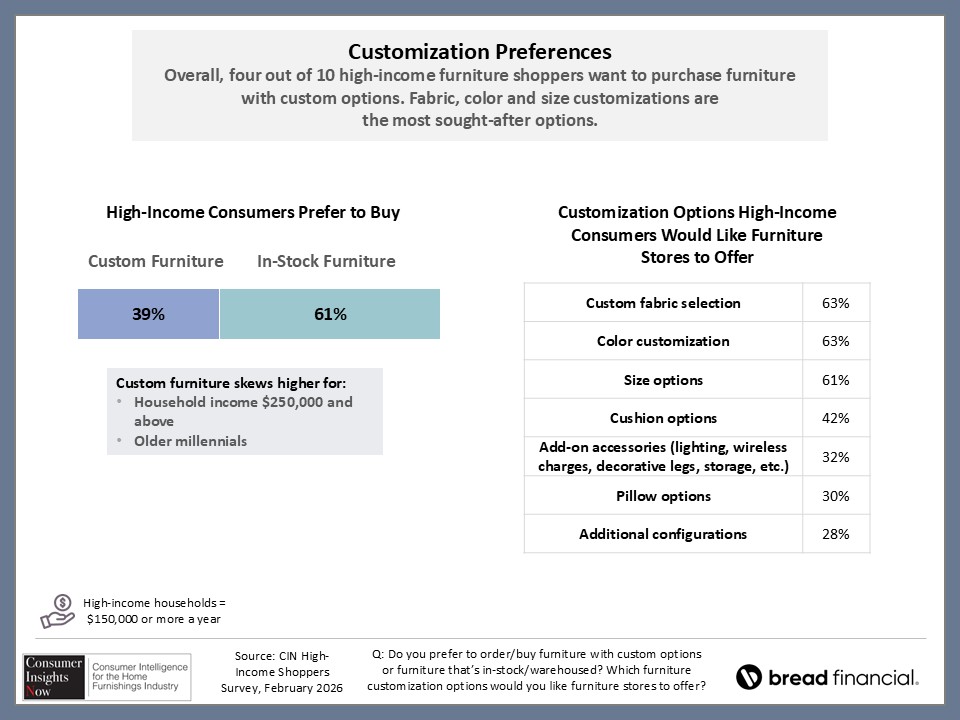
Other services they seek include delivery services (sought by 81% of those surveyed), in-home set-up services (66%), special payment promotions (42%), design services (39%) and diagnostic tools (29%).
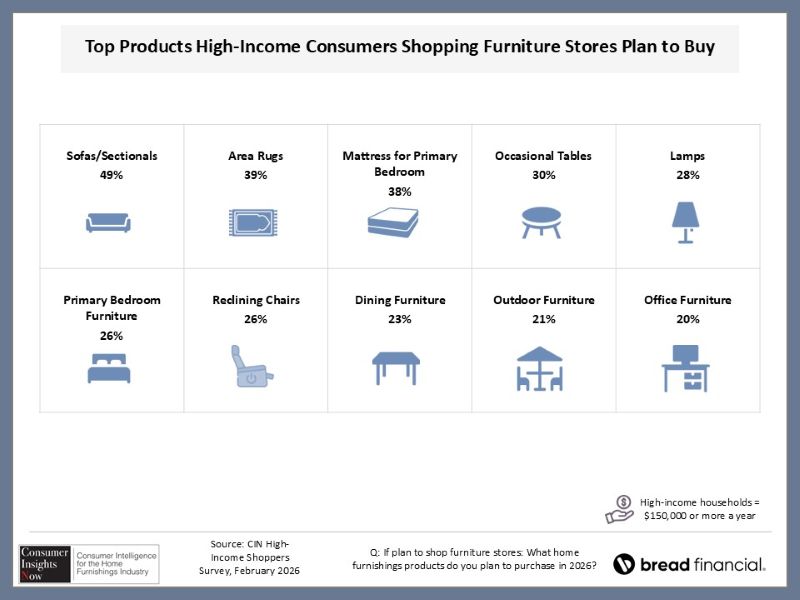
They also identified some key categories they plan to buy this year, which include some similar categories identified in prior consumer surveys as shown in the chart below.
Hopefully this information provides insights that help your store service this important yet often demanding consumer group. The good news is that they have the ability to spend to get just what they want. The challenge lies in helping fill those wants and needs. Is your store prepared to address this segment of the buying population?
As always, we would love to hear your thoughts on the subject and what you may be doing differently to address this consumer. Feel free to respond to Tom Russell at tom@homenewsnow.com or HNN Retail Editor Kathryn Greene at kathryn@homenewsnow.com
Below is a schedule of the spring 2026 edition of Consumer Insights Now and a link to each report that has already run.
+ March 23 – High-Income Shoppers Overview
+ March 30 – Designers
+ April 6 – Furniture Stores
+ April 13 – Home Design
+ April 20 – Second Homes