
 by
by Company produces a line of upholstery for TOV Furniture and other well-known OEM resources
HIGH POINT — With its purchase of Vision Contract Manufacturing here last fall, Revival American Contract Furniture has set out to do just what its name implies — revive American furniture manufacturing in the same area where it has had such a storied past.
The company was set up to purchase the struggling contract manufacturer, a feat that ultimately saved the operation from going out of business.
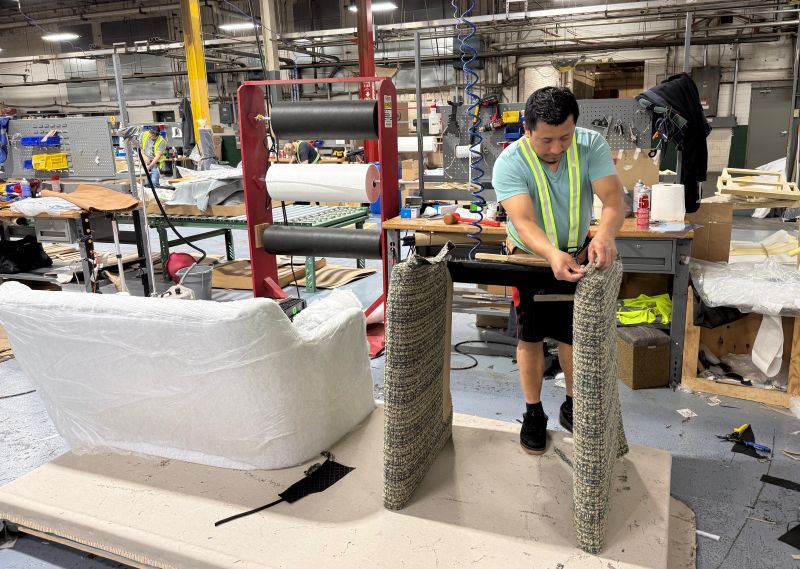
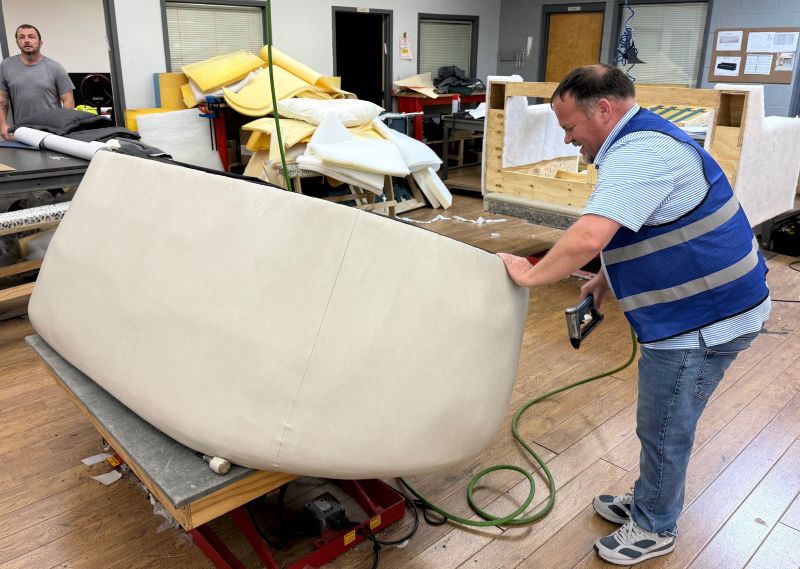
Today the company operates Vision’s former 170,000-square-foot plant in south High Point, producing individual lines of hospitality/contract and residential upholstery with a team of just over 50 workers.

The goal, as company Executive Chairman Bruce Krinsky notes on his LinkedIn page, is to reflect “a commitment to rebuilding American manufacturing and proving that high-quality furniture can still be made competitively in the United States. … Our goal is simple: Build locally, compete globally, and help show that American manufacturing can thrive again.”
It was a tall order, given the challenge of not only running a manufacturing operation profitably but also making sure the company’s investment of nearly $2 million in the operations was not wasted.
“It’s not an easy thing, but we didn’t sign up for easy,” said Krinsky, who also holds the title of chief problem solver — another term for CEO — at full-line furniture resource TOV Furniture. “But in trying to bring back manufacturing to the U.S. we have a path that we know is viable. We know that when it comes to large-scale upholstery made in the U.S, we can be as competitive as Asia for these types of goods.”
Today about half the company’s business comes from commercial/hospitality projects for well-known hotel operations such as Hilton, Marriott and Great Wolf Lodge, to name a few. These types of projects require significant resources to produce large runs of seating for guest rooms, lobby and dining areas, for example.
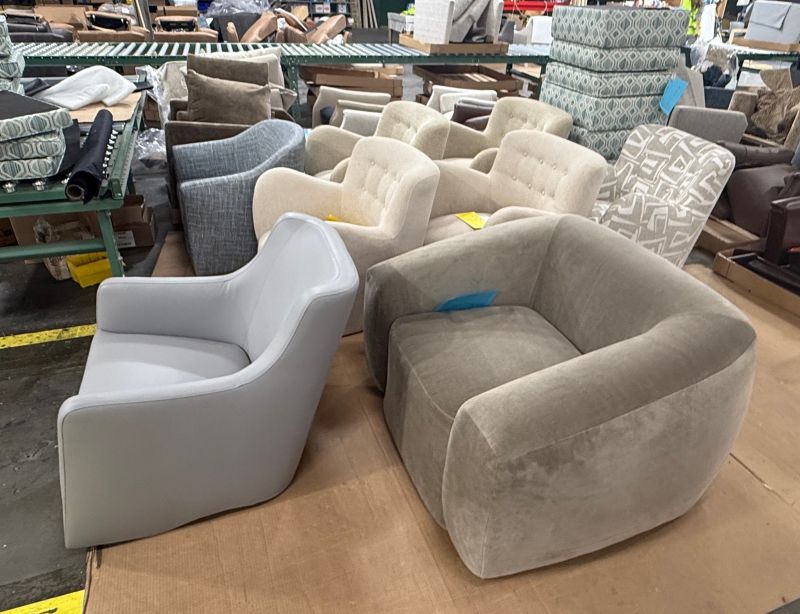
The other half of its business comes from the residential side, producing product not only for TOV and its retail customers, but also for other well-known OEM customers that serve retailers around the U.S. and the world.
Among its key advantages is its proximity to those customers in the U.S. Working with factories in Asia, the industry faces long lead times of several months. Here in the U.S., it is closer to eight weeks or less with repeat orders, Krinsky said.
“So you have a much shorter lead time and time, as we know, is money,” he added. “So if you are waiting a long time for product, you need to stock so much product to plan for that. That also requires additional warehouse capacity and additional cash flow tied up into inventory.
“You also don’t need to fly to Vietnam or some place on the other side of the world to see samples,” he said. “You can actually just come to North Carolina, which is a day trip.”
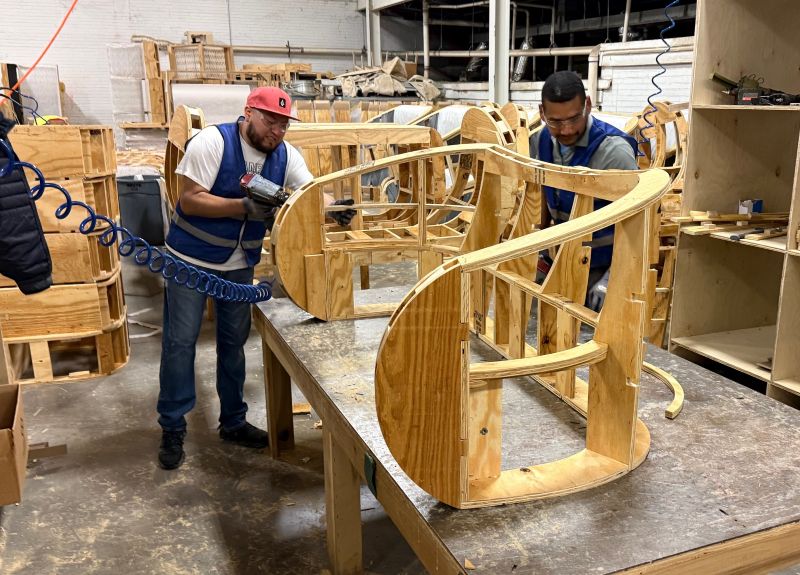
In acquiring Vision last fall, the company benefited from not having to build a facility and its production lines from the ground up. And by focusing on large-scale production runs versus custom product that is built one at a time, it can run efficiently, while also taking advantage of equipment, processes and talent it inherited with the acquisition.
Over time, Krinsky sees the facility doubling to 100 workers and potentially needing a second shift. And while he believes there is a strong base of workers in the area for open production jobs, a key challenge has been to fill upper-level management positions to run the day-to-day operations.
But the company has made strides in this area as well, including the recent hire of senior plant manager Brian Horn, who came to the company from Vanguard where he most recently was vice president of upholstery manufacturing.
With the ability to produce just over $30 million a year in upholstery, Krinsky said the facility is running at just over a third of its total capacity, meaning that it has plenty of room to grow for existing and new customers alike, including the residential side of the business, which he said likely will grow faster.
“The pipeline for hospitality and commercial projects is much longer,” he said. “They are very far out and have a very long lead time, which causes the immediate pipeline to be more towards residential. And I would also say that there are some hospitality clients that are leaning on overseas (production). They don’t know we exist yet and that there are solutions here that are cost competitive.”
He said that residential furniture clients appear more eager to give the company more business “because of the same bottlenecks I referenced earlier with overseas production and the supply chain. We all have been through COVID and we have all been through the tariffs and we have been through a lot of other obstructions. So if you can make a product in the U.S. and be economically viable and cost competitive, it is something that most companies would want to pursue.”
Of course value is often subjective, but the company believes its quality speaks for itself, whether it be a sofa in the TOV line that retails for $1,500 or one that it produces for an upper-end client that sells sofas for as high as $10,000.
“We have capabilities to do middle to high end, but personally, we are not a high-end brand,” he said. “So we are focused on the middle, but we can also do high end and we can produce for five-star hotels out of our facility.”
But he also made a key distinction between its domestic production model and others that offer higher levels of customization.
“We are not doing one-offs,” he said. “We are not looking for that kind of business. On the R&D side it is just way too costly and time consuming.”
However, he added that the company is seeing some increased demand for and is filling some custom orders that it can produce in higher quantities and on a repeat basis.
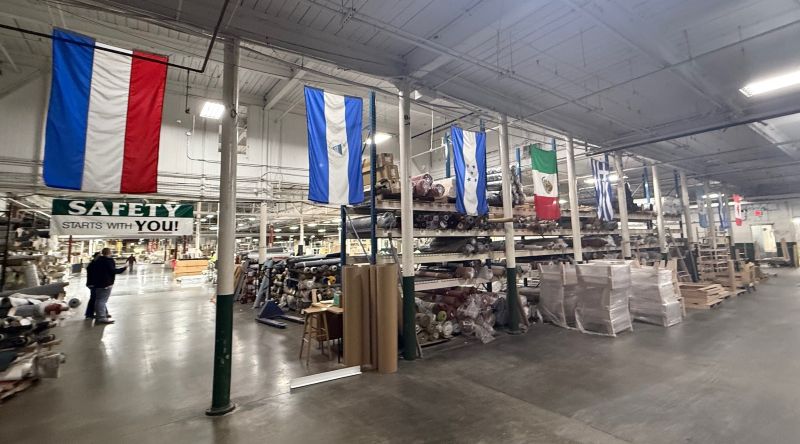
“The dealer also will offer numerous fabric options that we will stock for them and they will send us orders weekly or however frequently they are getting a meaningful amount of orders,” he noted. “And we will produce those orders and sometimes even stock the frames so we just need to put on the foam and do the assembly and we can ship it out really quickly. But it is not one-offs, because it is an ongoing program and they are buying a lot of the same frames.”
Given the success of the model thus far, he believes it is an example of how manufacturing can continue to be brought back to the U.S. with the right investment, the right equipment and the right talent in place.
“Our mission is to bring manufacturing here to the U.S., and we really do need the industry to be more aware of the fact that this can be done,” he said, noting that tariffs, supply chain challenges and rising labor costs overseas will continue to be issues impacting the industry. “This can’t just be one or a handful of people’s vision. It has to be an industry mission.”
He also believes domestic manufacturing will increasingly become of interest to younger consumers who are concerned about sustainability and the impacts of imports on the environment.
But most importantly, he ultimately believes it will be about speed to market that can only occur as your product is made closer to the core customer base.
“I think right now is the time to secure positions in domestic manufacturing whether it is your own factory like we did, or production capacity with key partners. I think it will be a more meaningful conversation in the future about how much of your product is made domestically. I think at some point it is going to become a competitive disadvantage to have to go to the other side of the world to produce and source some products. Today, it’s not the big that eat the small; it’s the fast that eat the slow. And having the capability to do these things domestically plays into that — being able to pivot and move faster in a world that’s only continuing to move faster.”