
 by
by Growth in housing helps propel traffic and sales as retailers compete with other retail segments vying for a limited pool of disposable income
HIGH POINT — To drive traffic for Black Friday, retailers employed various approaches, including aggressive media blitzes, flexible financing options, and sales that ranged in length from two-day events to monthlong promotions.
Results were ultimately mixed — perhaps unsurprisingly given the current economic headwinds. Home News Now spoke with a handful of retailers from across the country, and although they represent only a small share of the total marketplace, their Black Friday outcomes offer a glimpse into the state of retail.
Certain markets were affected by external circumstances, such as storms that dampened turnout. Such was the case at Indianapolis-based Godby Home Furnishings. “This Black Friday was almost dead-even with last year,” said Jeff Godby, second-generation owner. “We had a weather event on Saturday— it snowed.”
Promotions included a robust direct-mail campaign to prior customers, television and radio advertisements, and a two-page advertisement in the Indianapolis Star.
“We sold a lot of motion, and we sold a lot of recliners,” Godby said. “Mattresses were good, too.” Godby shared that the company is almost exactly even with last year. “If we hadn’t lost that Saturday, I think we’d be ahead,” he said.
Helping to drive furnishings sales is Indianapolis’s growing housing market. “The suburbs of Indianapolis are growing very, very quickly, especially where our locations are,” Godby said.
Several retailers in the Carolinas also saw good to strong performances, bolstered by increased housing demand.
“I think being in North Carolina, our housing market continues to be strong,” said Blair Ingle, executive director of sales and marketing for Furnitureland South. “We continue to get people who are moving from the Northeast or even the Midwest, and looking for warmer climates in North Carolina as a destination. We’re also very strong throughout the Southeast.”
The Jamestown, North Carolina-based company, which is the world’s largest retail furniture store with 1.3 million square feet of space, was pleased with its Black Friday turnout.
“We’re not open on Sundays, so for us, Black Friday is a two-day event,” Ingle said. He added that the products in the Furnitureland South Outlet, which were an additional 25% off, were a hit, as were mattresses, thanks to bundle pricing from manufacturers. Ingle also said that, as a traffic driver, social media outperformed all other channels. “People are all over TikTok and Instagram, and Facebook,” he said.
Furnitureland South’s sales increased 15% over last year, but Ingle also mentioned that the store’s Labor Day weekend sales are bigger than Black Friday, as well as what he refers to as “the multiday stretch” after Christmas Day.
Farther afield in Charlotte, North Carolina, Queen City Homestore is also benefiting from increased housing demand.
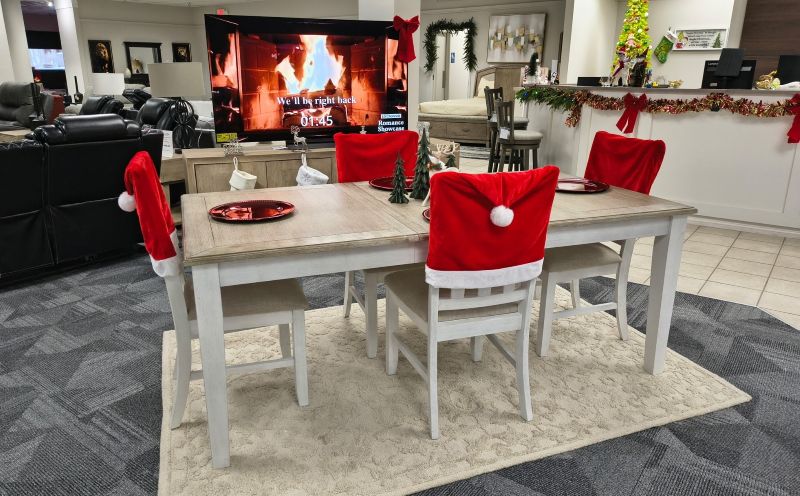
“We’re having more people move to the Carolinas than ever before,” said David Horvath, category manager, furniture, at Homestore. Although he didn’t disclose specifics, Horvath shared that the retailer’s Black Friday performance was “resoundingly up.”

Last year, the historically appliance-only retailer expanded into furnishings and opened nine new stores.
“With this year, all the numbers are coming back positive that this will be a plus year from a same-store sales perspective, and then obviously all the new furniture and appliance home stores are going to be plus business for us,” Horvath said. “I think Black Friday will be a definitive force for us on the furniture side next year.” Top-performing categories were case goods, which Horvath said he finds are always driven by new-home sales, as well as motion upholstery, followed by stationary.
In other markets, like Florida and Washington, where housing demand is stable, financing offers drew in consumers.
According to an analysis by Versatile Credit, a provider of consumer financing software, the 2025 Black Friday and Cyber Monday period “demonstrated a continued shift in consumer finance patterns, where retail growth is now being driven by higher-ticket, high-intent purchases.”
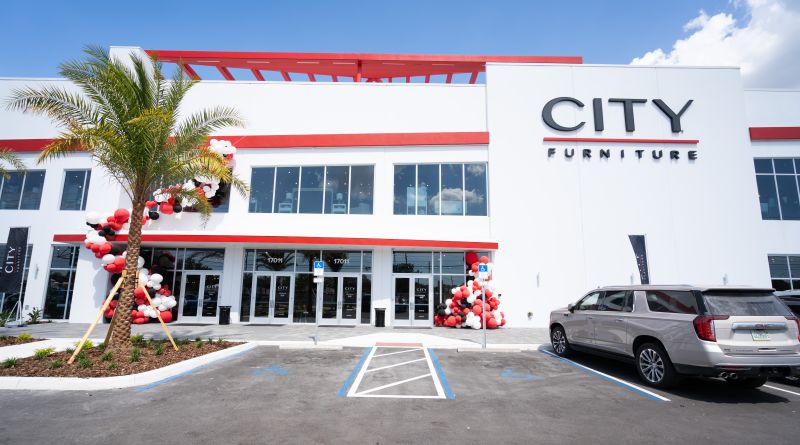
Financing as a hook was part of City Furniture’s strategy, a retailer based in Tamarac, Florida, with 25 stores throughout the state.

“It was a combination of sales, percentages off and also long-term financing until 2030,” said Keith Koenig, chairman of City Furniture. “But we also did something we hadn’t done before, which was a free 65-inch television with every purchase over $3,000.”
In Sumner, Washington, Old Cannery Furniture Warehouse offered 36-month special financing through Wells Fargo, with a minimum purchase of $2,998. “That’s our tried and true and what we use for all major holidays,” said Ashley Krebs, company marketing director.
Although Old Cannery Furniture Warehouse’s biggest sales holidays are the outdoor tent sales they run on Labor Day, Memorial Day and Fourth of July, Krebs projected the company will see an increase over last year, but she stopped short of sharing a specific number. “We’re on target to hit our goal for the year,” Krebs said.
If there was one major takeaway from Black Friday sales, it’s that the motion upholstery category was red hot all over the country. Motion was also the top performer for Old Cannery Furniture Warehouse and for retailer Furniture Fair, which has locations in Ohio, Kentucky and Indiana.
“Black Friday was a strong event for us this year, performing right in line with our positive expectations,” said Craig Daniels, marketing director at Furniture Fair. “We also saw meaningful lifts both before and after the event, which was encouraging to see in addition to the results from Black Friday itself.”
Labor Day and Black Friday are two of Furniture Fair’s largest promotions, and the retailer said it was pleased to be up in sales for both holidays this year.
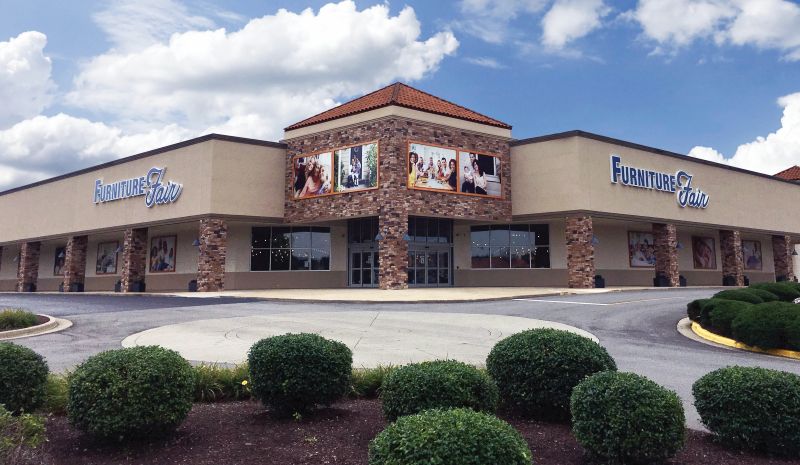
However, Daniels feels that Black Friday seems to be losing a bit of sheen among consumers. “Many times, Black Friday can make or break a company’s fourth quarter, so it remains an important event,” said Daniels. “However, with most retailers now promoting Black Friday one to two months in advance, the impact is becoming diluted. Consumers are growing numb to the event, and the sense of excitement and exclusivity it once carried is fading.”